ABM for UK SMEs including the use of AI
ABM for UK SMEs: how to run account-based marketing with a small team, and use AI for account research and outreach without losing credibility. Updated for 2026.

Demand generation
Generating more leads is rarely the fastest route to more pipeline. Converting the demand you already create, to the standard you are capable of, almost always is.
These five tips are about focus and productivity rather than volume. Each one makes the existing investment work harder before you consider adding to it.
Understanding the shape of your demand generation waterfall (visitors, enquiries, leads, opportunities and orders) tells you whether your marketing can realistically deliver the business objectives set for it.
Monitor and compare the conversion rate at every stage, and cut it by market segment, product or application area, country if you operate internationally, and sales or partner channel. Looking at the stages relative to one another tells you where you are performing and where you are not.
It may turn out you are creating plenty of leads, in which case the resource belongs in new conversion strategies rather than in more lead generation. Benchmarking externally matters here too: your own trend tells you the direction, not the standard.
Existing customers find it strange when you communicate with them as though the relationship never happened. The value proposition you are communicating usually differs, and so should the content. An established client who already uses the product expertly needs depth, not an introduction.
According to Forbes, it is five times more expensive to attract a new customer than to retain an existing one, which is reason enough to write to the two audiences differently. Automated personalisation makes this practical at small scale.
Consider the buying group as well as the relationship. Research from CEB, now part of Gartner, put the average B2B decision-making group at 5.4 people, and sellers need a yes from each of them without always knowing who they all are or what matters to each. Your content and messaging should reflect that. It is precisely this dynamic that drives the growth of account-based marketing, where you deliberately target and message every member of that group.
Knowing and backing the winning strategies is the key to getting an optimal marketing contribution to business results.
Not knowing the relative impact of each strategy and tactic produces significant waste, because spending continues on initiatives that should have been changed or stopped. The instinct when leads are short is to invest more. More often, investing the current budget more effectively (by backing the winners) delivers the improvement you were looking for.
A content strategy built around a small number of hero pieces, reused consistently and appropriately across the marketing mix, improves focus, productivity and results at the same time.
High-quality content takes time to produce, and the common pattern is to publish a piece, distribute it once, and move immediately to making the next one. Spreading effort thinly across many significant pieces is worse than concentrating it on fewer that earn better engagement and better-quality leads.
A good test of whether content is working is its usage. It is all too common to see thousands spent producing a video and then to find that views are minimal. Hero content takes more effort, and it is what better results are built on.
Significant leakage occurs in nurturing and converting leads wherever there is a gap in how a prospective buyer wants to engage with your business. Improving the journey and the conversion steps produces considerably better results from the demand you already generate.
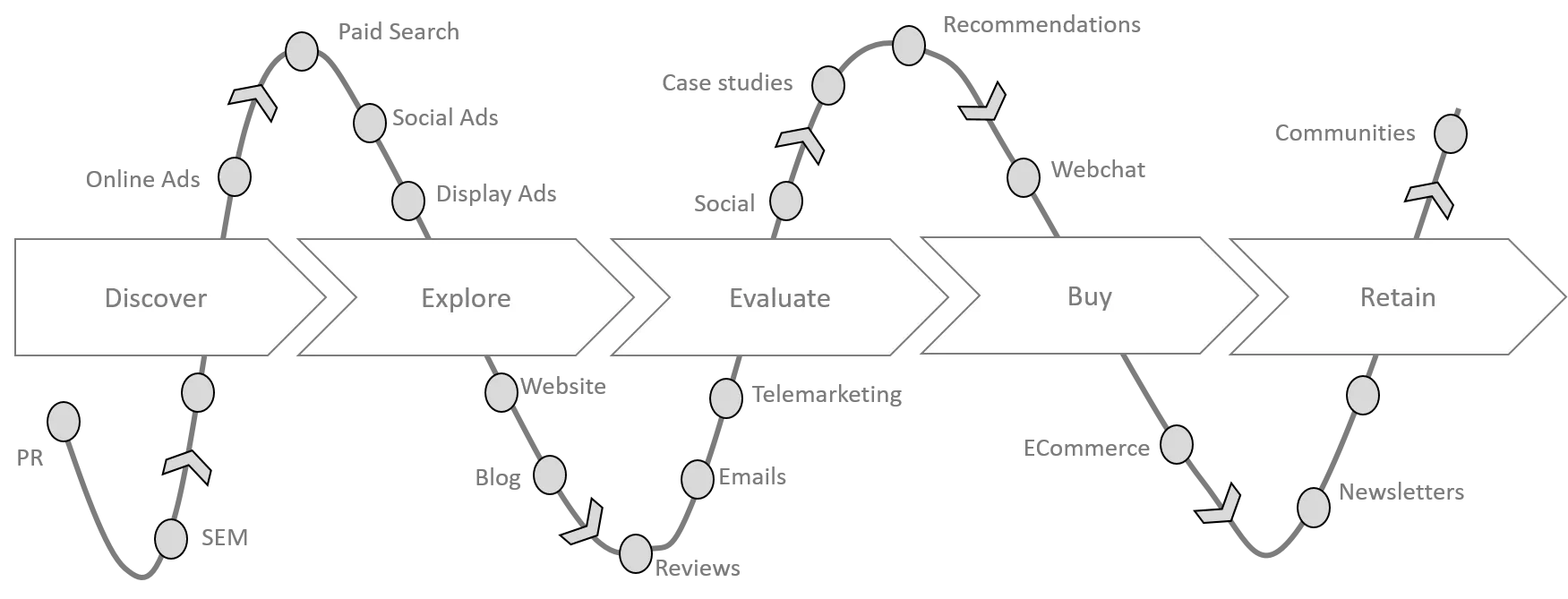
Work through the stages the buyer moves through, typically discovery, exploration, evaluation and purchase, and create the content and assets they are looking for at each one. That is what minimises leakage and gives you a demand generation process worth investing in.
Consider bidding for government and private tenders. There are tools and companies that identify issued opportunities and then help you bid for them. Tender Rocket is one example, providing an online application to find opportunities alongside guidance on bidding effectively. Their guide to applying for tenders is a reasonable place to start.
Who wrote this

Steve founded Epitomise in 2017 after UK, international and global marketing leadership roles, most recently as Global CMO of the Vitec Group’s Videocom Division. He works with SME and technology businesses on strategy, positioning and the execution that follows — more about Steve.
Read next
ABM for UK SMEs: how to run account-based marketing with a small team, and use AI for account research and outreach without losing credibility. Updated for 2026.
Where AI genuinely helps with marketing strategy and where it quietly misleads. A practical workflow for UK SMEs, updated for 2026 with what changed when AI started doing its own research.
Run marketing as a repeatable quarterly cycle — Review, Focus, Implement, Optimise — so strategy turns into shipped work and measurable pipeline.
A short discovery call is usually enough to tell. No deck, no pitch.
Book a discovery call