8 steps to strategic growth
Eight steps that turn a strategy into growth: choose the vital few objectives, resource them properly, own them, and communicate progress until the business believes it.

Strategy
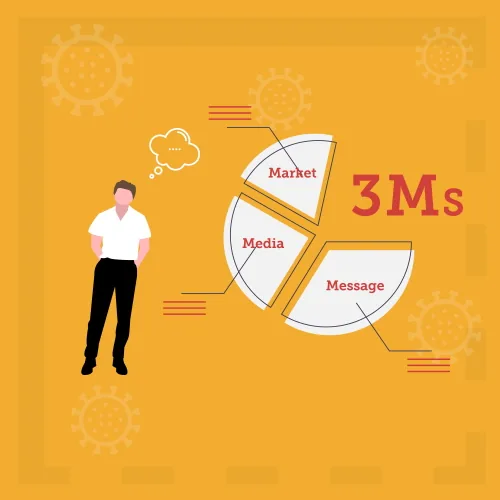
Uncertainty does not change the 3Ms of marketing — Market, Message, Media. It changes the assumption underneath the first one. Check where your ideal customer has actually moved, using your own analytics and independent forecasts, before you rewrite a word of your message.
The UK economy faces ongoing uncertainty: inflation, changing consumer behaviour and shifting global markets. Businesses have to adapt to a fast-moving environment to stay competitive. So what does the year ahead look like for yours?
In their simplest form, the 3M principles of marketing — Market, Message and Media — remain constant, even in turbulent times. Evaluate your target Market carefully, craft a Message tailored to its needs, and select the right Media channels to reach it.
Will your target market next year look the same as it did before the pandemic, or even the same as it did last year? Have shifts in consumer preference, technology adoption or economic conditions changed who your ideal customers are? Where will your revenue come from, and how will your business define its own version of the new normal?
Once you have clearly identified your target Market, the next steps are to develop the right Message and select the best Media to reach it.
Digital marketing tools and analytics give you real insight into audience behaviour, preferences and trends. Google Analytics, social media insights and predictive analytics tools let you monitor what is happening now and adapt quickly. Combining current performance metrics with broader economic and industry forecasts lets you base marketing decisions on evidence rather than assumption.
Assumptions and projections will always play some part. But using reliable data makes your strategies informed, timely and aligned with the market as it actually is.
Search data is a good, cheap example. Take a specific service term relevant to your sector and look at how UK search volumes for it have moved over the past year. One term on its own proves little, but examine the related terms around it and a direction usually appears. This is readily available data, and it can tell you what is happening in your market before your pipeline does.
Research a little and you will find organisations that publish data on what is happening in the market, along with the opinions and feedback of purchasers.
There are market, employment, purchasing and confidence indicators — and forecasts against those indicators — that help you think about what may happen in the UK over the coming eighteen months, and what it might mean for your business.
Several of these indicators are widely understood. GDP, unemployment and consumer confidence need little explanation. The Purchasing Managers’ Indexes (PMI) show the prevailing direction of economic trends in the manufacturing and service sectors: a reading above 50 indicates expansion compared with the previous month, a reading below 50 suggests contraction, and a reading at 50 means the number of businesses reporting improvement equals the number reporting the opposite. Retail Sales month-on-month provides an aggregated measure of sales of retail goods and services over a period.
Watching a forecast move is often more instructive than the forecast itself. During 2020, Trading Economics’ published outlook for UK GDP growth in 2021 went from 3.2% in July, to 0.7% in October, and back to 3.2% in November. Three readings of the same number in five months, from the same source. That volatility is the argument for checking regularly rather than planning once a year against a single figure.
The value of looking closely at this data is that it helps you form a view of when your overall market is likely to return to, or exceed, its earlier levels — and therefore when your own decisions need to be made.
Beyond the headline indicators there is a wide range of considered, sector-level research: studies of how particular industries are being affected, which sectors are exposed and which are relatively resilient.
Technology-driven sectors tend to hold up better when physical footfall drops, while leisure, hospitality and traditional retail feel that same drop immediately. The 2020 shock is the clearest illustration on record: Beauhurst researched 28,499 UK growth companies and found VoIP, EdTech and eHealth largely unexposed, with London home to the highest proportion of potentially positively impacted companies at 17%, while in leisure and entertainment 20% of companies were severely impacted and 34% critically impacted.
Those particular figures belong to that particular shock, and you should not carry them forward. The method behind them is what transfers: someone has almost certainly published sector-level research on the conditions you are facing now. Find the research covering your own sector rather than relying on the national picture.
Many alternative views on any given forecast are available, including research into how purchasers themselves are feeling. Confidence is the thing to watch. Until people feel confident, they are reluctant to spend, and that reluctance shows up in your pipeline before it shows up in any published index. In late March 2020, for example, Strategy Analytics surveyed 1,464 adults and found 79% thought it would take some time to get back to normal — a sentiment reading that arrived well ahead of the economic ones.
Look for several independent sources. Where they broadly agree, you can act with more confidence. Where they disagree, that disagreement is itself useful information about how much uncertainty to plan for.
Above we have looked at only a few data sources, indicators and forecasts. By using available market data and consistently monitoring the changes that occur as time passes, you will build a more informed view of your adjusted target market, its likely purchasing behaviour, and the right timing for your business decisions.
Once you have defined your target Market, consider how your business approach and processes may need to adjust to meet its new needs. From those needs, and your approach to them, document your Message — your revised value proposition.
The Media you use to reach your audience may need to change too, particularly if your marketing previously leaned heavily on face-to-face methods such as exhibitions, networking and events.
A helpful way to choose the right media is to walk through your refined target market’s journey. How will your business be discovered, explored and evaluated before a purchase is made — and which of those previously face-to-face steps now need a digital alternative?
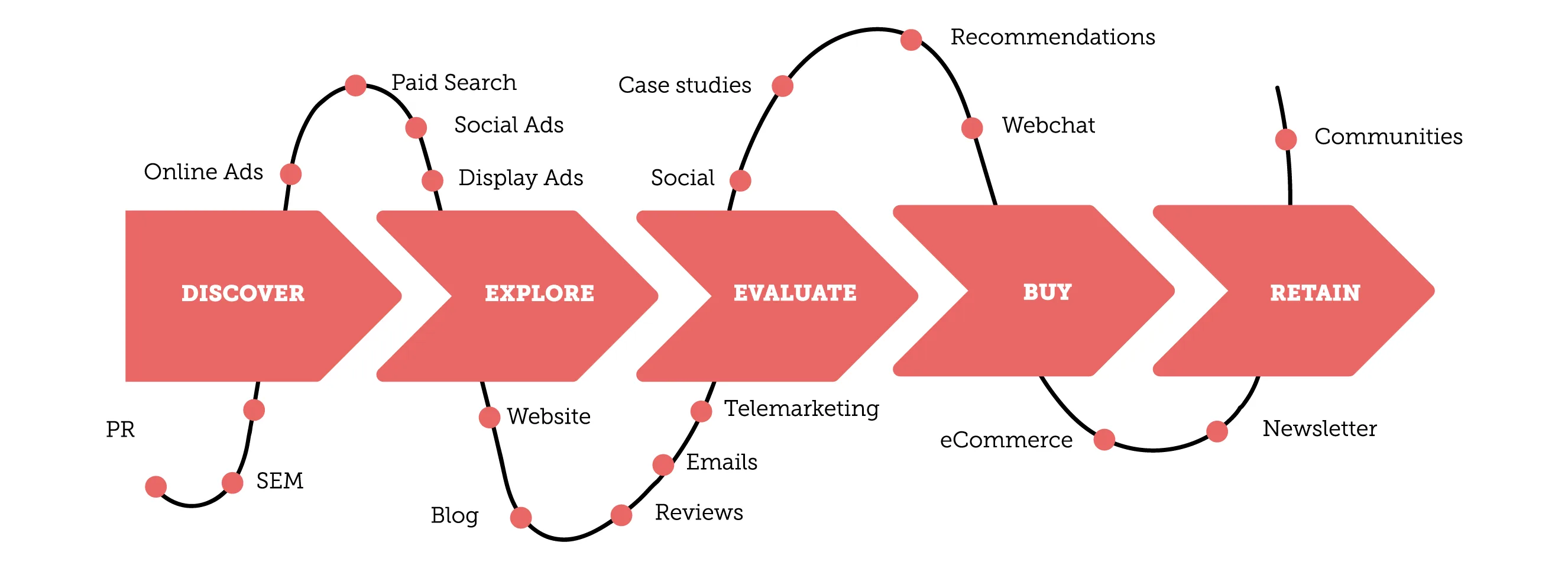
Our eGuides go into the digital strategies worth considering as you make those choices.
Interested in discussing your own business in more detail? Contact us.
Who wrote this

Steve founded Epitomise in 2017 after UK, international and global marketing leadership roles, most recently as Global CMO of the Vitec Group’s Videocom Division. He works with SME and technology businesses on strategy, positioning and the execution that follows — more about Steve.
Read next
Eight steps that turn a strategy into growth: choose the vital few objectives, resource them properly, own them, and communicate progress until the business believes it.
What is ‘strategic’ in strategic marketing? It’s defining and achieving business objectives by doing the right things in the right way through a considered and measured approach. Knowing where you want to be and having a prioritised and resourced plan to get you there using marketing best practices, competencies, tools and processes.
There are two simple management tools that help audit a business and develop prioritised strategies that support business improvement and growth. They are commonly known as a SWOT analysis (or business audit) and a business impact matrix. Use them together to help you create the right prioritised business marketing strategies.
A short discovery call is usually enough to tell. No deck, no pitch.
Book a discovery call