
ABM for UK SMEs including the use of AI
ABM for UK SMEs: how to run account-based marketing with a small team, and use AI for account research and outreach without losing credibility. Updated for 2026.

Search
When you built your website, wrote your last blog or produced your last piece of content, did you choose the subject off the top of your head, or did you research what your buyers are actually searching for?
Consider a simple case.
A training company launched a new management course. They added it to their website as a Leadership Development Program and wrote a blog about the benefits of leadership development programmes. The content was informative, well written, engaging and followed search best practice. They promoted it with paid Google ads, got good engagement, and created quality leads.
So what was the problem? They positioned and marketed the course on gut feel: on what they believed was best.
A quick check in 2018 showed that “Leadership Development Program” was searched in the UK on Google and its search partners around 590 times a month. The comparable term “Leadership Training” was searched around 1,900 times a month — over three times as often.
By aligning the course to the term buyers were already using, they would have been fishing in a pond over 300% larger. Assuming a threefold increase in enquiries and the same enquiry-to-lead, lead-to-opportunity and opportunity-to-order conversion rates, sales could potentially have grown by a similar multiple. That is an illustration of the arithmetic, not a guaranteed result — but the size of the gap is the point.

Search engine optimisation usually focuses on maximising performance for the keywords you have already chosen — see 15 factors to improve SEO results.
But as the example above shows, the strategic step before that, researching and planning your targeting and positioning, can have far more impact. It is important in every industry and market segment, not just the obviously digital ones.
Target the right areas and the hours you spend on a website, blogs, videos and messaging are aimed where they will give the best return.
The Google keyword planning tool is simple to use. It gives relative volumes for keywords and terms, quickly, and historically by month. That means you can see seasonal trends, decide when a campaign should go live, and decide whether your positioning and messaging need to change at different points in the year.
GDPR is a good example of demand moving fast. Search volumes for “GDPR compliance” in the UK grew rapidly in the run-up to May 2018, then fell away.
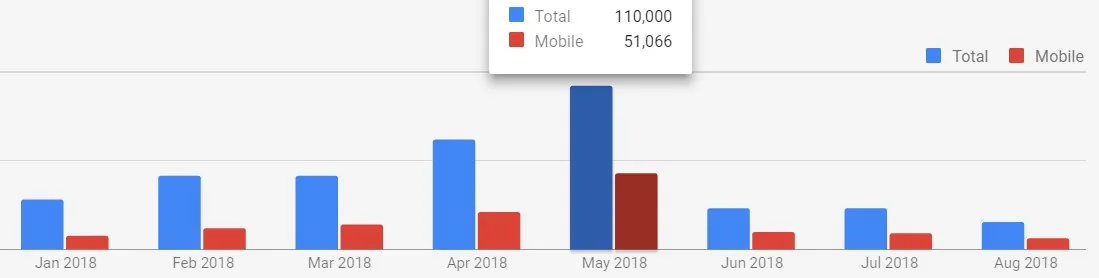

If you sell security services, the question is what the volumes are now, whether this is still the area to target, and what engagement you can expect if it is.
If you want to look at what competitors are targeting too, there are search marketing tools that let you get properly into the analysis, though you will need to pay for them. Try the free tier first to check the data covers what you need, because indexing coverage varies. Two worth considering are SEMrush and SpyFu.
Need help targeting, creating and converting leads in the areas that will deliver the best results? Get in touch — work is scoped by outcome, not by hours.
For more on generating results from marketing, read our other posts or download the guide on 26 marketing strategies to grow leads and sales.
Who wrote this

Steve founded Epitomise in 2017 after UK, international and global marketing leadership roles, most recently as Global CMO of the Vitec Group’s Videocom Division. He works with SME and technology businesses on strategy, positioning and the execution that follows — more about Steve.
Read next
ABM for UK SMEs: how to run account-based marketing with a small team, and use AI for account research and outreach without losing credibility. Updated for 2026.
Where AI genuinely helps with marketing strategy and where it quietly misleads. A practical workflow for UK SMEs, updated for 2026 with what changed when AI started doing its own research.
Run marketing as a repeatable quarterly cycle — Review, Focus, Implement, Optimise — so strategy turns into shipped work and measurable pipeline.
A short discovery call is usually enough to tell. No deck, no pitch.
Book a discovery call