ABM for UK SMEs including the use of AI
ABM for UK SMEs: how to run account-based marketing with a small team, and use AI for account research and outreach without losing credibility. Updated for 2026.

Segmentation
Trying to be everything to everyone leaves a business with a shallow understanding of its markets, its competitors and its customers — which shows up as poor targeting and weak positioning. Focus produces depth, and depth is what lets you build a winning proposition. In B2B, segmentation, targeting and positioning turns focus into a decision rather than an argument.
Business-to-business activity makes up the majority of income for a substantial share of UK businesses, with a further large group blended between B2B and consumer markets, according to research published by the Business Intelligence Group. Only a small minority of companies are not marketing to other businesses at all.
The B2B market is widely misunderstood in the UK, but the truth is that we are a country built on business-to-business activity. That means competition, and identifying, targeting and winning clients is not easy. Winning a new client is also considerably more expensive than keeping an existing one — but if you intend to grow, new clients are essential.
So where do you start? You cannot hit the ground running without preparation, which is where STP comes in.
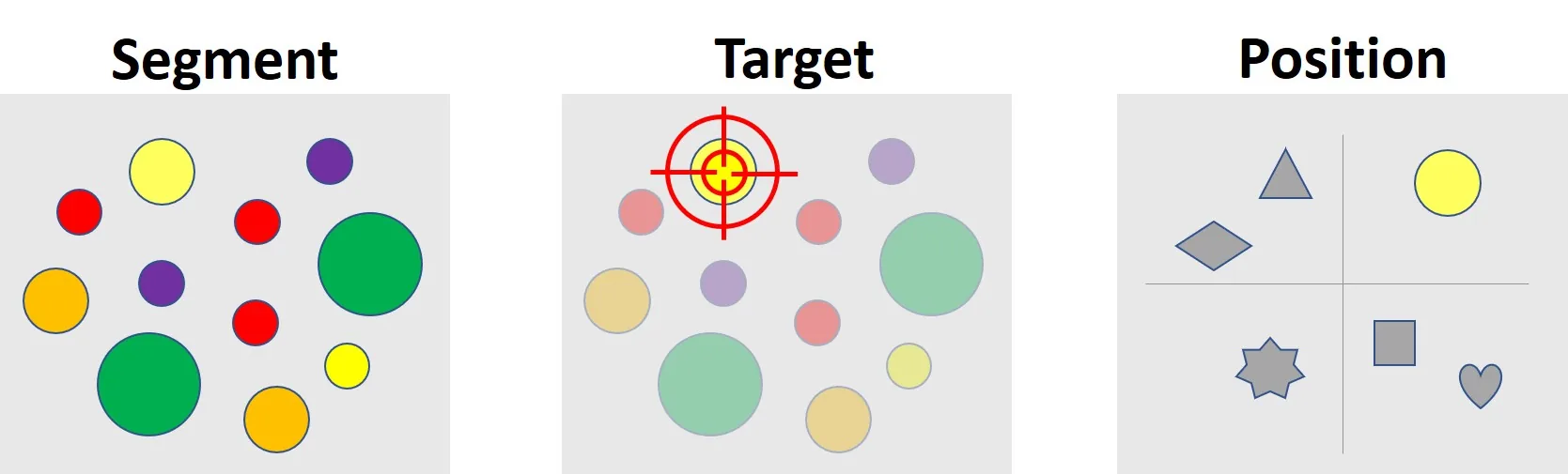
STP stands for segmenting, targeting and positioning. In simple terms, the technique focuses your marketing effort and produces more efficient strategies. It also brings clarity on customer demand and on your position in the market.
The three cornerstones are designed to support the development of a market plan and a supporting marketing mix that drives growth. If you feel like you are floundering and do not know where to go next, this is the strategy that helps.

Segmentation is the first step, and it is essential before any strategic targeting.
There are two questions about value in your company: which customers you are selling to, and how you serve them. Segmentation addresses the first by identifying exactly who your target market is. It divides a larger market into smaller sections, grouping clients by their characteristics, needs and desires. Segments can be enormous, covering almost all of your potential clients, or extremely niche.
Some B2B segmentation examples:
That is a small sample. The main models are covered further down.
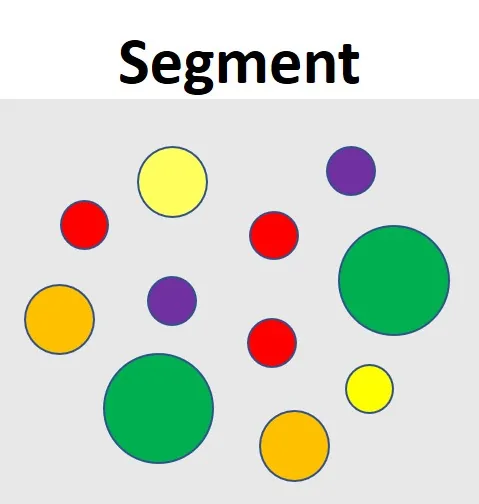
Targeting is the process of selecting the audience you will market to. There are three broad approaches.
Mass marketing disregards segmentation and targets a wide audience. If you provide IT support for schools, mass marketing means marketing to all schools regardless of location, pupil age or budget. It sounds appealing, but it lacks focus and makes it hard to sharpen anything. It is often called the spray-and-pray method: throw out as much marketing as possible in no particular direction and hope.
Segmented targeting is more thoughtful. Rather than addressing your whole potential client base, you pick specific segments to cater to. Those choices then shape the products you build or the services you offer, and how you make them appeal when it is time to market.
Niche marketing, also called concentrated marketing, focuses on one small segment and builds a brand directed solely at its needs. An IT support company serving only schools in its local area is an example. It reduces the audience dramatically, but it gives you a much better foothold and can win real market share.
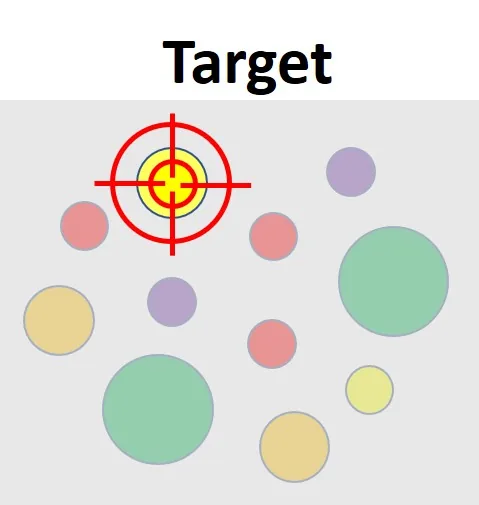
Positioning is the final part of STP, and it depends on the first two. Segmenting and targeting tell you who you need to reach. They do not tell you how.
For that, you explore the value of your business from your customers’ point of view: the benefits they seek, and how you set yourself apart from competitors. This is your value proposition. Be careful not to confuse it with your own view of the value of your products or services; it has to stay focused on how the customer sees them.
There are many values you can build a position on. Offering more for less — high quality at a lower price — is a popular one, and challenger smartphone brands have used it to break into a market dominated by giants. Other positions include:
Sustainability has grown in prominence as a position, particularly with younger buyers who are more willing to pay more for environmentally responsible brands. If you market to those businesses, building sustainability into the core of your company can increase your appeal.
Although positioning is largely based on the needs of the client, you cannot base your entire strategy on them. If every business did, markets would be hopelessly oversaturated. You need the sweet spot between a value people want and one that has not already been taken.
A positioning map is the usual way to find it. You plot two comparison values — most commonly price against quality — and place your competitors on the grid. Gaps become obvious: a clear lack of high-quality providers at a mid-range price, for example. If you can occupy that space, you have a differentiating value that helps win business clients.
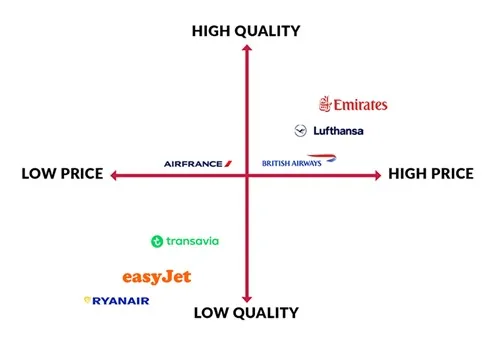
Trying to be everything to everyone usually means becoming nothing to no one. Spray-and-pray produces thin, unaligned results. Focus produces depth and differentiation, and those produce sustained growth.
You need clarity on your target growth markets, the companies you will pursue within them, the persona of the decision-makers who will buy, and the strengths and weaknesses of your competitors. All of that begins with STP. It builds understanding of your priority markets and the commercial opportunity within each, of where the majority of your business is likely to come from, of who those businesses are, what problems they want solved, and how you can meet those needs.
Some specific benefits:
Targeting does not tell you how to reach people. It identifies who they are, which is only the start. Positioning takes you further, but without good marketing you may not see the results your research suggested. STP lays a solid foundation; it is not the whole strategy.
Segments do not stay the same. Needs, lifestyles and priorities change. A client’s industry can take off or crash, changing their budget dramatically: they may suddenly be able to buy more, or no longer afford your fees at all. Being adaptable is a must, and STP forces you to build that habit. Stay ahead of shifting trends, analyse your data to spot techniques losing effectiveness, and keep adjusting.
From the moment a client starts looking, they want to be directed to the best fit. A positioning strategy makes sure that is you.
If you do not know who your audience is, what they want and how you meet their need, you can build a business that is entirely off the mark. Skipping STP tends to produce:
Segmenting, targeting and positioning are easier than they have ever been. We have access to volumes of data that were previously unavailable — and yet only a minority of businesses are genuinely data-driven. The usual reasons are a lack of knowledge about how to access data, a lack of understanding of how to use it, too little time or resource committed to data-driven campaigns, and a plain underestimation of what data can do.
In a digital world, finding market data, industry trends and sector growth rates is far simpler than it used to be. When carrying out STP you can analyse competitor offerings, audience demand, visitors to your own site and competitors’ sites, the success and failure of different strategies, and future trends.
McDonald’s is not an IT, tech or B2B company, but its use of data and segmentation is instructive. In an interview, a US marketing director described how STP shaped the launch of a new chicken salad. Research showed one audience segment was less inclined to see a salad as a filling substitute for a burger, so marketing to that segment presented the salad as hearty and generous. Marketing aimed at Hispanic audiences instead built on cultural resonance, with an advertisement showing the farming and preparation of the ingredients — an entirely different feel, from the same product.
That a business of that scale builds its marketing on consumer research and segmentation is a reasonable signal that the approach works.
There are five main methods.
The most popular form, covering observable, people-based differences that are easy to measure. It is the most basic form of segmentation and companies often do it almost by instinct. Its simplicity makes it a good starting point, but the segments tend to be large and unfocused, which is why businesses combine it with other methods to narrow down.
For a small business on a tight budget, demographic segmentation is a good start, and for some companies it is enough on its own — marketing different computer models at different prices to businesses with different budgets, for instance.
Dividing people by behaviours relevant to your business:
Behavioural data often looks at how your audience interacts with you specifically. If an existing customer is a light user of your tool, that should shape how you market to them next and what you suggest.
The most basic form: splitting your audience by location to understand their needs and target them better. That can be country, county, town or postcode, or it can group by the characteristics of a place, so that two people in different cities land in the same segment. Other characteristics include language differences, urban against rural, and average salary.
Simple as it is, geography is often crucial. Imagery in a campaign may need to change from country to country, and sometimes region to region, to resonate. Needs differ too: someone in Scotland may want warmer clothing than someone in the south of England, and someone near the coast is a better prospect for a paddleboard than someone in the city.
Often confused with demographic segmentation, but very different. Psychographic factors are mental and emotional, and much harder to observe, which is why fewer businesses use them — and why they are missing valuable insight.
Psychographic analysis builds a picture of your target clients’ motives, needs and preferences, including their morals and values. You might discover that a large part of your audience values eco-friendly approaches in their own business and prefers to buy from businesses that share that. That is directly actionable.
It is usually paired with other methods. Many businesses reach for it when they are struggling to convert an existing segment: you can look deeper, understand what draws people in, and increase focus on that.
Specific to B2B. Firmographic segmentation looks at the characteristics of companies rather than individuals: the industry they are in, the number of employees, how they operate — in-house or through freelancers — and their revenue growth. Segmenting on these factors gives you far more insight into which markets suit your business, and how to adapt your services and marketing to them.
Less commonly used, and harder to get right, but some businesses thrive on them.
Value segmentation splits your audience by transactional worth — how much they are likely to spend — usually worked out from past purchase data, purchase frequency and typical order size.
Lifestage segmentation groups by where the customer is in their life or, in B2B, where the business is: planning a launch, launching, growing through stages, or being sold. Companies need different tools at each stage and have different budgets for them.
Seasonal segmentation looks at how needs change through the year, whether around seasonal events or industry-specific dates such as the end of the tax year or the start of the school year. It tells you when to expect a lull, when to increase marketing, and how to change the message.
B2B structural models add further options: segmenting by market structure, vertical markets, early adopters, operating variables, strategic variables, and horizontal markets.
Why, what and who is an increasingly popular framing. Segmenting by why looks at the behaviour of the decision-maker, mainly past purchases, to predict what they will buy next. Segmenting by what looks at the data behind those purchases — how much, how often, from whom — which gauges loyalty and what they seek from suppliers. Segmenting by who is the simplest: basic information about the company, used to shape more targeted marketing.
There is no one-size-fits-all equation for choosing which segments to target. You look at a range of factors and pick the segment you can work with best.
When assessing which B2B segments to target, you are weighing the relative importance of different segment attributes against your commercial and longer-term strategic aims.
Weighting the importance of each attribute and then scoring candidate markets against it gives you a mathematical way of assessing relative attractiveness. The attractiveness of any segment is relative to your current or future strength to take advantage of it.
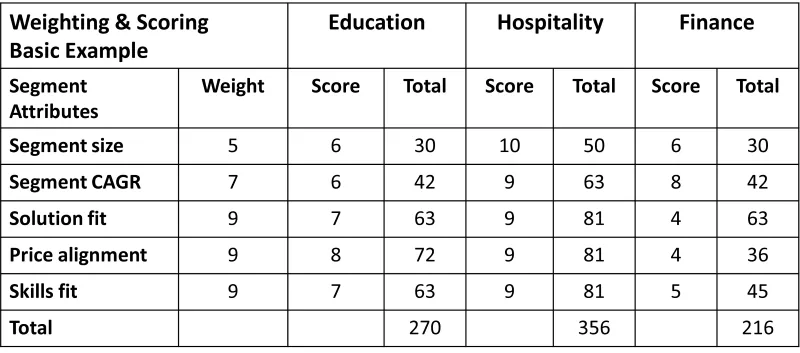
Having scored, you may conclude that two industries — hospitality and education, say — are the most promising. You then segment those further, looking for the sweet spot within each. Education might break into schools, colleges and universities. Hospitality might break into hotels, segmented again by star rating. Finance might separate investment banking, business banking, and life assurance and pensions. The requirements of those sub-segments differ, and so does their attractiveness against your aims.
For many businesses, choosing which segments to target is the easy part. Building the segments in the first place is harder, because it needs data. There are several routes:
That single figure is already a segmentation. Split by whether a business employs anyone at all, the 2020 ONS population looks like this:
| UK private sector businesses, start of 2020 | Businesses |
|---|---|
| All private sector businesses | 5,980,520 |
| With employees | 1,412,748 |
The rest employ nobody. ONS splits that no-employee group further into registered and unregistered businesses, and breaks the employer group down by employee band, so you can size a segment such as “UK businesses with 10 to 49 employees” without commissioning anything.
The same population can be segmented on other dimensions from the same free source. ONS publishes a count of UK businesses for each of these industry groupings:
| Industry grouping |
|---|
| Agriculture, forestry and fishing |
| Mining and quarrying; electricity, gas and air conditioning supply; water supply, sewerage and waste management |
| Manufacturing |
| Construction |
| Wholesale and retail trade; repair of motor vehicles and motorcycles |
| Transportation and storage |
| Accommodation and food service activities |
| Information and communication |
| Financial and insurance activities |
| Real estate activities |
| Professional, scientific and technical activities |
| Administrative and support service activities |
| Human health and social work activities |
| Arts, entertainment and recreation |
| Other service activities |
Cross the two — industry by employee band — and you have a defensible size for almost any B2B segment you might target. These are 2020 figures, so pull the current release before you plan against them.
You may be surprised how detailed the free government data is. The ONS business, industry and trade pages are the place to start.
Ignoring the data. Data can be overwhelming, but ignoring it is like sitting on a goldmine and not digging. If you are struggling to interpret what you need, bring in help or spend time learning — do not give up on it.
Not being adaptable. STP is not a stagnant strategy. What it taught you one month may be different the next, so keep analysing. Be prepared to switch segments if one becomes less suitable.
Ignoring new segments and personas. New segments appear constantly as buying power shifts, the political climate changes, or new products create demand elsewhere. Treat each as a chance to re-evaluate your current strategy and how your personas are changing.
Segmenting, targeting and positioning exist to shape marketing strategy. Once you know your audience, you can find evidence-based information about them and act on it: which channels they actually use, what a business at their stage can afford, what pressures they are under this year, and what messaging will therefore resonate. You will have more clarity about who your audience is, how to reach them, and how they are likely to behave next.
The UK B2B market is full of potential, with a near-endless stream of possible clients. But marketing to all of them is not the answer. Whether you provide software for small businesses, physical technology for schools, or IT support for companies worldwide, strategic targeting through segmentation is what turns a large market into a plan. Split the audience into targetable sections, use positioning to differentiate, and you end up with a more appealing brand and a strategy built for growth.
If you would like help working through segmenting, targeting and positioning for your own business, get in touch.
Who wrote this

Steve founded Epitomise in 2017 after UK, international and global marketing leadership roles, most recently as Global CMO of the Vitec Group’s Videocom Division. He works with SME and technology businesses on strategy, positioning and the execution that follows — more about Steve.
Read next
ABM for UK SMEs: how to run account-based marketing with a small team, and use AI for account research and outreach without losing credibility. Updated for 2026.
Where AI genuinely helps with marketing strategy and where it quietly misleads. A practical workflow for UK SMEs, updated for 2026 with what changed when AI started doing its own research.
Run marketing as a repeatable quarterly cycle — Review, Focus, Implement, Optimise — so strategy turns into shipped work and measurable pipeline.
A short discovery call is usually enough to tell. No deck, no pitch.
Book a discovery call