
ABM for UK SMEs including the use of AI
ABM for UK SMEs: how to run account-based marketing with a small team, and use AI for account research and outreach without losing credibility. Updated for 2026.

Transformation
Technology-driven change is creating real commercial opportunity for SMEs — and real risk for the businesses that treat it as someone else’s problem. This article looks at what is actually shifting, what that change enables, and how to build a considered strategic marketing plan that separates hype from opportunity.
Technology has reshaped our world at an astonishing rate. Two decades ago Bluetooth was a new idea, social media was in its infancy and Facebook had not launched. The first YouTube video went live in 2005, Amazon Web Services launched in 2006, and Apple changed the game with the first iPhone in 2007. Those innovations have since reshaped how businesses operate.
As technology advances, the barriers of speed, storage, power and connectivity keep falling, enabling ways of working that were previously impossible. Lithium-ion battery production, for example, has become dramatically cheaper over the last decade, which is what made electric vehicles and grid-scale energy storage commercially viable. That single breakthrough will drive industry shifts for another ten years.
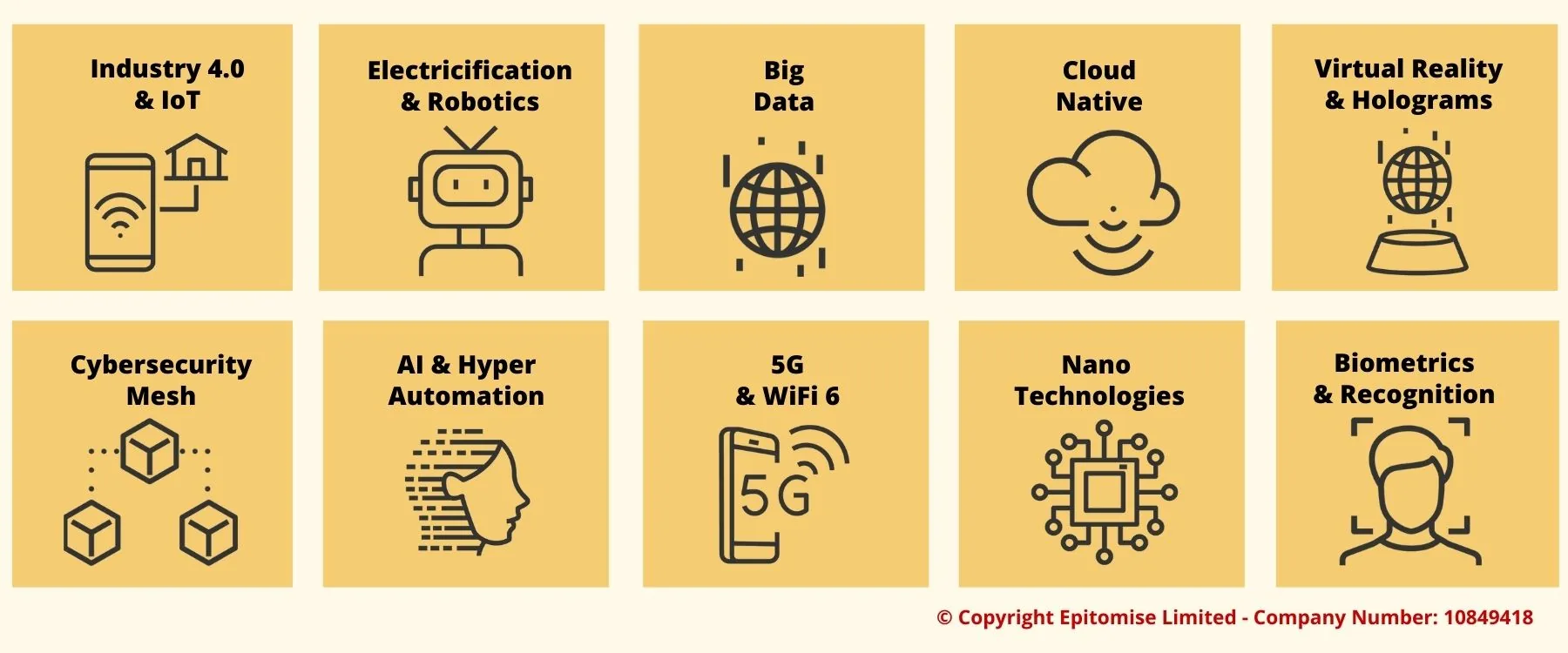
Several advances are shaping the near future of business:
Businesses that embrace these changes stay ahead. Those that do not risk falling behind in an increasingly digital and automated market.
Technology is not really about innovation. It is about business value. Connecting machines, streamlining operations and analysing data more efficiently lets companies:
Home security is a simple example. A decade ago a surveillance system was expensive and complex. Today an affordable, wireless, battery-powered camera can be monitored from anywhere through a phone. Businesses can apply the same principle: use technology to create smarter, more efficient processes that drive growth.
In manufacturing and industrial sectors, connecting machines and devices through IoT represents a significant transformation. Companies that integrate smart automation can achieve faster production cycles, predictive maintenance that prevents costly breakdowns, and real-time supply chain tracking for better inventory management.
Modern vehicles carry a large number of microprocessors, collecting data that can be transmitted over 5G to inform drivers, insurers and service centres about maintenance needs. The same principle applies across industries, from sensor-equipped agricultural machinery to predictive analytics in healthcare.
While technology presents opportunity, it also creates risk for businesses that fail to adapt. Kodak, Nokia and Blockbuster were all industry leaders that lost relevance because they did not pivot fast enough.
Your competitors are likely already implementing AI-driven automation, digital-first marketing and cloud-based systems. If you do not keep pace you risk losing market share to more agile competitors, carrying higher operational costs, and missing new revenue streams entirely.
The advances above are enabling rapid change in how businesses work, sell and are regulated:

This change gives businesses a chance to grow sales, reduce cost, raise productivity and efficiency, improve quality and satisfaction, deliver more with less, create competitive advantage, meet social responsibilities and improve profitability.
Almost every industry is being influenced by technology-driven change, and leaders are working out how to make the right decisions — how to filter out the hype and select the things that will actually progress commercial prosperity.
Have you developed and started to implement a considered plan to transform, perform and grow?
When you look at your portfolio, the products and services that were your rising stars and cash cows may be about to fall away as competitors adopt new processes enabled by technology. Being ahead of the curve lets you take full advantage of a new opportunity. Being behind it puts you in a position where you may no longer be competitive.
As change happens, your understanding has to develop with it. The right intelligence helps you target, retain, develop and grow business optimally. The change may also produce different target customers who need a different approach to attract, engage and win.
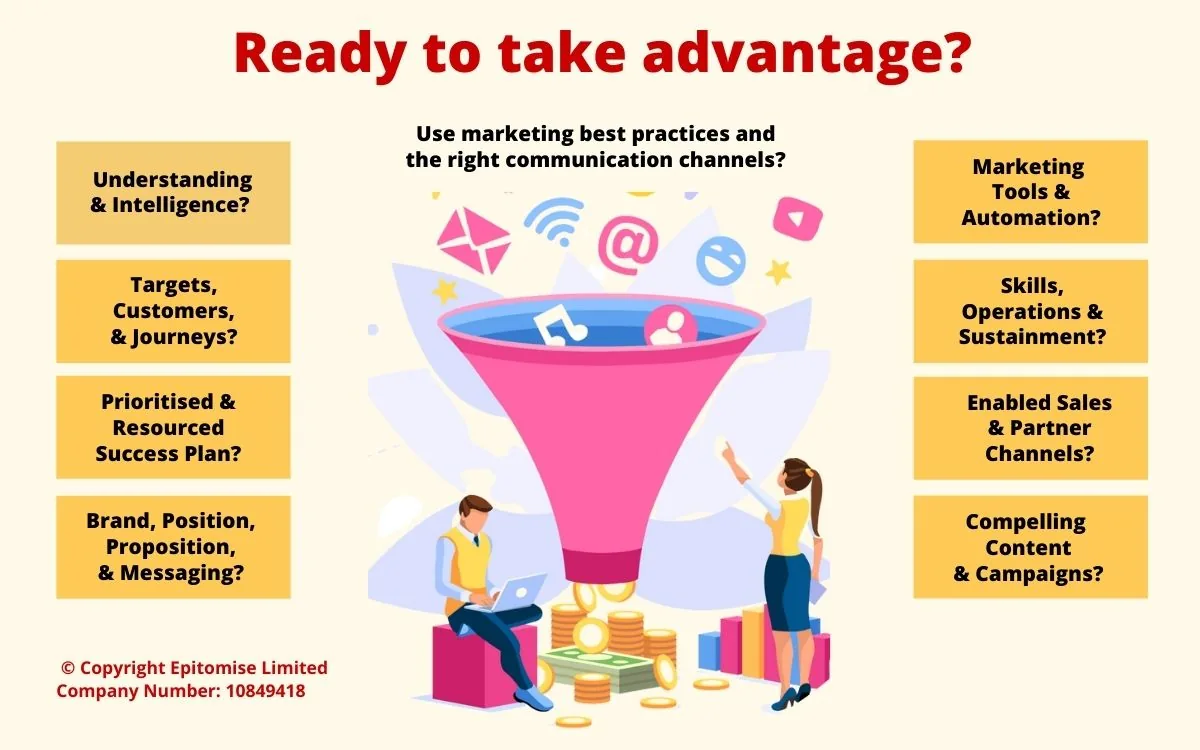
Start with a reflection on what success looks like. Use the intelligence you have built to create a prioritised, resourced strategic marketing plan for reaching it. That plan should establish the differentiated value of your business and your proposition, and how those carry into your brand and messaging.
Once the plan is documented and the target audience is known, marketing channels can be selected and executed against using best practice. Marketing automation and digital tools help with execution, especially where resources are limited. Priorities are resourced with the right skills and the right marketing operations environment, so focus is sustained.
Sales channels, direct or indirect, are then enabled: aware, motivated, skilled, convinced and equipped to deliver results, with supporting campaigns and content built around them.
With a considered approach you can separate hype from reality, and hold a prioritised, resourced roadmap to the success you have defined.
Epitomise’s transform, perform and grow methodology — the Transform Accelerator — is a four-stage approach:
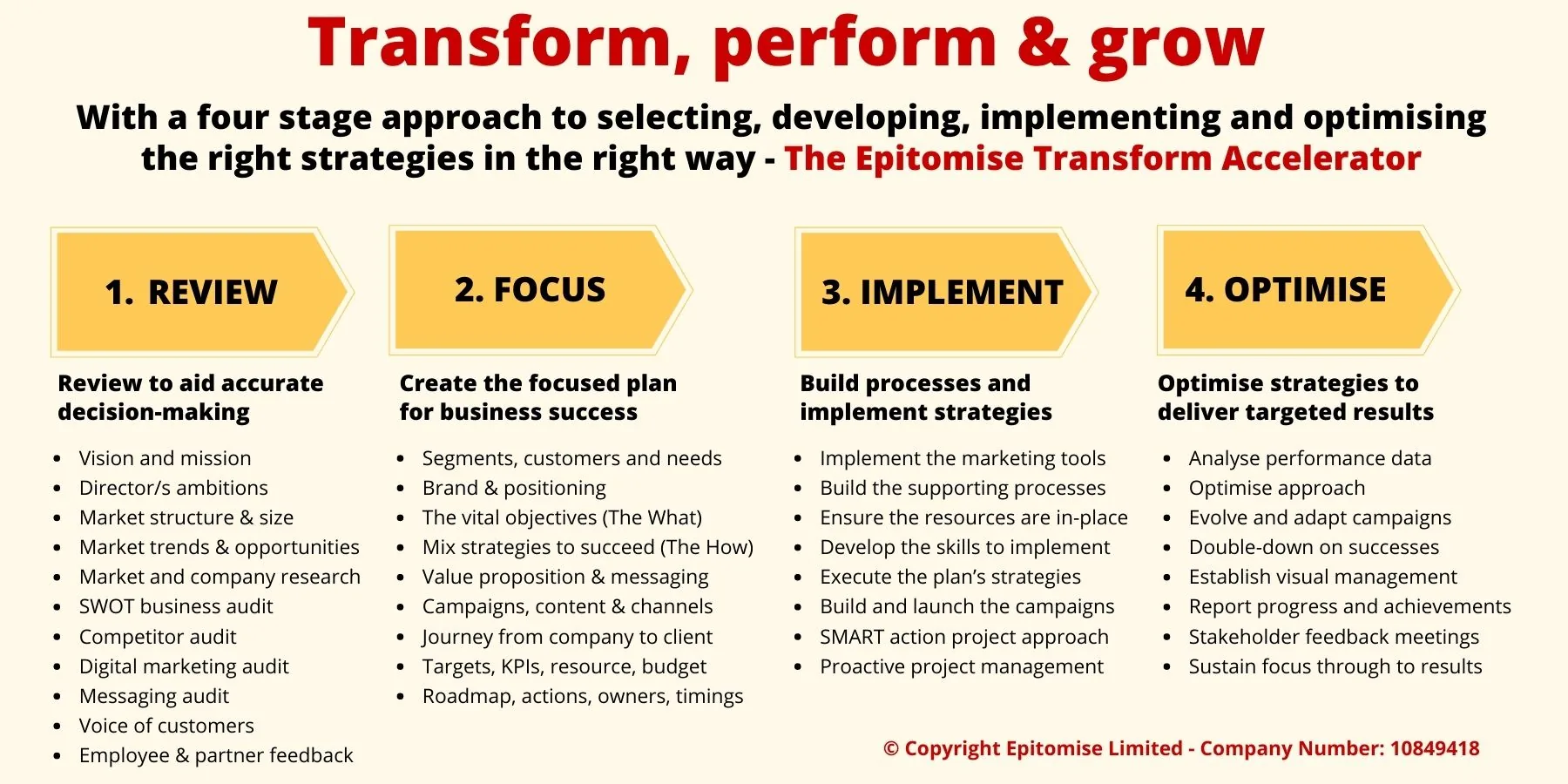
The review stage gathers the inputs needed for accurate decisions: agreeing the vision and mission, reflecting on the directors’ ambitions, sizing the external market and its structure, and identifying trends and opportunities. It draws on market and company research, and on business, competitor, digital marketing and messaging audits. The voice of customers, employees and partners is part of it.
The focus stage creates the strategic marketing plan. It defines target segments, ideal customers, decision-makers and influencers, and their needs. Positioning and brand are developed from the vision and mission, the needs of those customers, and the values and solutions of the company in meeting them. The vital objectives are defined — the what — followed by the prioritised marketing mix strategies to achieve them, which is the how. The value proposition and value-based messaging are created from the company’s aims, brand values, customer needs, competitors and solutions. With clarity on targets and how many customers are needed, channels are selected and the campaigns and content are defined, including the journey from unknown company to loyal repeat customer. Targets and KPIs are plotted monthly on a visual management dashboard, aligned to the strategies and actions on the roadmap, with agreed owners, resources and budget.
That produces a documented strategic marketing plan ready to build and implement. It is scoped by outcome, not by hours, and it is agreed by all stakeholders: what success requires, and by when.
The next phase is to build the supporting processes and implement the prioritised strategies, tools and operational environment — ensuring, through training or support, that the skills exist to execute the plan using best practice with proactive project management.
Getting the best result from everything you create requires continuous improvement, monitoring and adjustment. Progress reporting and regular meetings initiate the changes and tweaks that double down on what works and stop what does not. Nobody can guarantee every initiative performs. What can be guaranteed is that the client remains in control of their investment, their return and their risk.
Follow the steps above and your business can take advantage of the opportunity created by technology-driven change, with a considered strategic marketing approach.
Who wrote this

Steve founded Epitomise in 2017 after UK, international and global marketing leadership roles, most recently as Global CMO of the Vitec Group’s Videocom Division. He works with SME and technology businesses on strategy, positioning and the execution that follows — more about Steve.
Read next
ABM for UK SMEs: how to run account-based marketing with a small team, and use AI for account research and outreach without losing credibility. Updated for 2026.
Where AI genuinely helps with marketing strategy and where it quietly misleads. A practical workflow for UK SMEs, updated for 2026 with what changed when AI started doing its own research.
Run marketing as a repeatable quarterly cycle — Review, Focus, Implement, Optimise — so strategy turns into shipped work and measurable pipeline.
A short discovery call is usually enough to tell. No deck, no pitch.
Book a discovery call