What is A/B testing?
Learn what A/B testing means, how a controlled marketing experiment works and which mistakes make test results unreliable.

Marketing glossary
An ideal customer profile helps a B2B company focus on accounts where value can flow both ways. It describes the organisations you are best placed to help, not an imaginary perfect customer who never raises an objection and signs whatever appears in front of them.
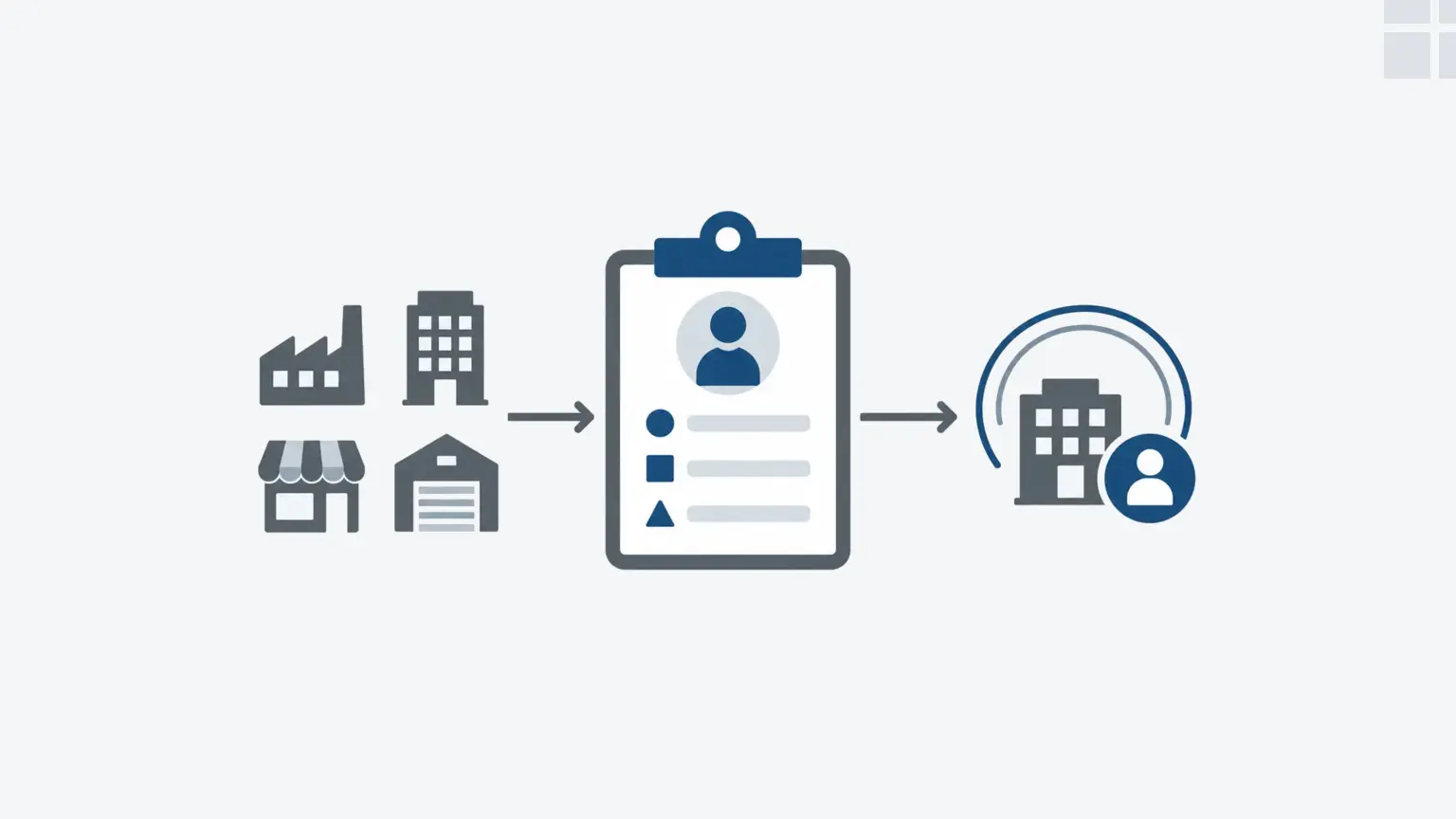
An ICP defines the characteristics that make an organisation a strong fit for your offer. It may include sector, size, location, operating model, technology, growth stage and regulation. Those visible facts matter only when they indicate a relevant need, ability to adopt and realistic route to purchase.
A practical ICP combines four kinds of criteria:
It should also record exclusions. A company may look attractive by revenue but require an accreditation, integration or international support model you do not have.
Imagine a consultancy that helps technology firms develop propositions and go-to-market plans. Its ICP could be UK B2B technology businesses with an established product, a senior sponsor and a need to enter a new segment or improve inconsistent demand generation.
The meaningful criteria are not merely “technology” and “UK”. The product must be developed enough to market, leadership must be willing to make positioning choices, and somebody must be able to implement the resulting plan. A pre-revenue founder still searching for a product idea may need different help. A global enterprise requiring a 30-country rollout may sit outside the consultancy’s delivery model.
An ICP gives marketing and sales a shared basis for prioritisation. Marketing can choose topics, channels and account lists with a clearer view of fit. Sales can qualify more consistently. Leaders can decide which enquiries are attractive rather than treating every possible contract as equally valuable.
It also improves learning. If results differ sharply between strong-fit and weak-fit accounts, a blended average may hide the reason. Comparing segments can reveal where acquisition, retention and delivery work best together.
Do not define an ICP only by the customers you already have. Existing customers may reflect historic referrals rather than the market you can now serve best. Combine account data with interviews, delivery experience, profitability, retention and strategic direction.
Do not confuse an ICP with a buyer persona. The ICP describes the organisation. Personas describe the people within it who use, influence, approve or block a purchase.
No. It is central to account-based marketing, but it also improves wider targeting, qualification, positioning and channel choices.
Review it when the offer, market or delivery model changes, and when evidence shows that assumed strong-fit accounts do not buy, adopt or remain customers as expected.
Who wrote this

Steve founded Epitomise in 2017 after UK, international and global marketing leadership roles, most recently as Global CMO of the Vitec Group’s Videocom Division. He works with SME and technology businesses on strategy, positioning and the execution that follows — more about Steve.
Read next
Learn what A/B testing means, how a controlled marketing experiment works and which mistakes make test results unreliable.
Learn what answer engine optimisation means and how to make useful business content easier for search and AI systems to extract and cite.
Learn what bounce rate means, why analytics tools calculate it differently and how to diagnose a high bounce rate without guessing.
A short discovery call is usually enough to tell. No deck, no pitch.
Book a discovery call