What is A/B testing?
Learn what A/B testing means, how a controlled marketing experiment works and which mistakes make test results unreliable.

Marketing glossary
AEO helps an answer system understand exactly what your page says, why it should trust it and which question it resolves. It is not a trick for inserting one magic paragraph into otherwise unhelpful content.
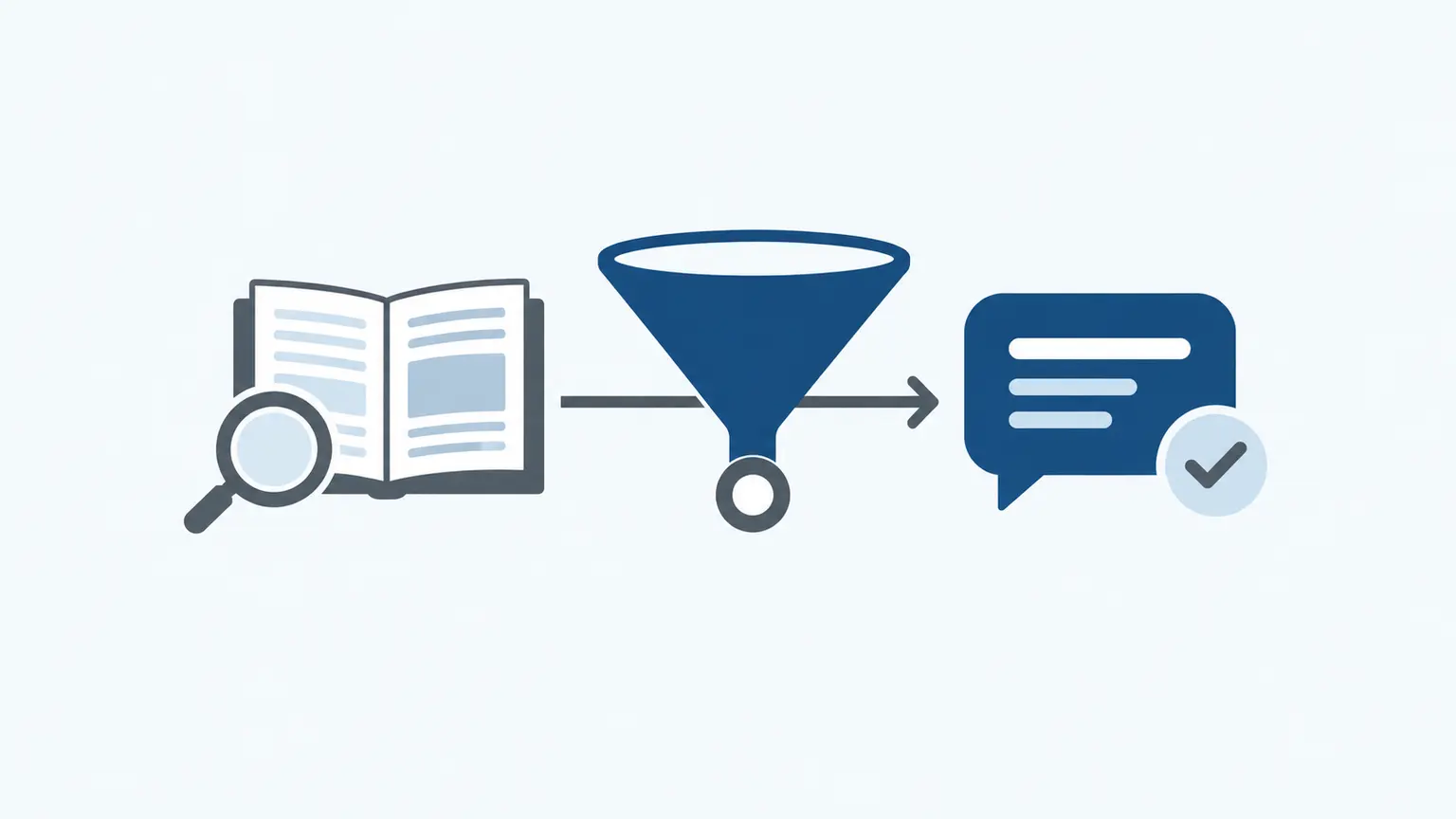
Traditional search optimisation often focuses on earning visibility in a list of results. AEO considers situations where a system answers the question directly, perhaps through a featured snippet, voice response, knowledge panel or AI interface.
The underlying job remains familiar: understand the user’s search intent and provide the best supported response. AEO places extra emphasis on extractability. Useful pages define terms plainly, use descriptive headings, distinguish similar concepts, show calculations where relevant and identify the organisation or expert responsible for the information.
A payroll consultancy wants to answer “What is payroll outsourcing?” A weak page opens with several paragraphs about the consultancy’s passion before explaining the term. A stronger page gives a concise definition, states what an outsourced provider typically handles, explains what remains the employer’s responsibility, supplies a realistic example and answers genuine follow-up questions.
The second page serves a human reader better and gives an answer engine clearer material to extract. Appropriate structured data can describe the article, organisation and breadcrumbs, but the markup should represent visible content rather than manufacture claims the reader cannot verify.
People can encounter answers before visiting a website. A useful citation or prominent direct answer can create awareness and trust even when it produces fewer immediate clicks. For a specialist SME, that makes clear expertise and recognisable attribution commercially valuable.
Good AEO also improves ordinary pages because it encourages:
AEO overlaps with SEO, but it is not a replacement for technical accessibility, reputation, links or strong service pages.
The first mistake is creating dozens of near-empty definition pages. An answer engine has little reason to cite a page that adds nothing beyond a sentence available everywhere else. Each page should contribute explanation, distinctions, examples or first-hand expertise.
Another mistake is using FAQ or other schema markup as if it guarantees a result. Structured data helps machines interpret content; it does not oblige a search engine to display it. Businesses also write artificial question-and-answer sections containing sales claims nobody genuinely asks. That weakens the reader’s experience and rarely creates durable visibility.
Finally, AEO should not sacrifice nuance. Give the short answer first, then clearly state conditions or limitations where the truthful answer depends on context.
AEO and SEO overlap. SEO covers broader organic-search visibility, while AEO concentrates on making a response easy to understand, extract and attribute in direct-answer experiences. Strong technical SEO and useful content support both.
No. Valid structured data can reduce ambiguity, but the system still assesses relevance, quality, authority and its own result format. Markup should accurately describe useful content that is already visible on the page.
Who wrote this

Steve founded Epitomise in 2017 after UK, international and global marketing leadership roles, most recently as Global CMO of the Vitec Group’s Videocom Division. He works with SME and technology businesses on strategy, positioning and the execution that follows — more about Steve.
Read next
Learn what A/B testing means, how a controlled marketing experiment works and which mistakes make test results unreliable.
Learn what bounce rate means, why analytics tools calculate it differently and how to diagnose a high bounce rate without guessing.
Learn what brand positioning means, how to define it and how an SME can occupy a useful, distinctive place in customers' minds.
A short discovery call is usually enough to tell. No deck, no pitch.
Book a discovery call