What is A/B testing?
Learn what A/B testing means, how a controlled marketing experiment works and which mistakes make test results unreliable.

Marketing glossary
Search intent explains why somebody searched, not merely what they typed. Matching it is central to useful SEO and paid search because a technically relevant page can still be the wrong answer to the user’s actual task.
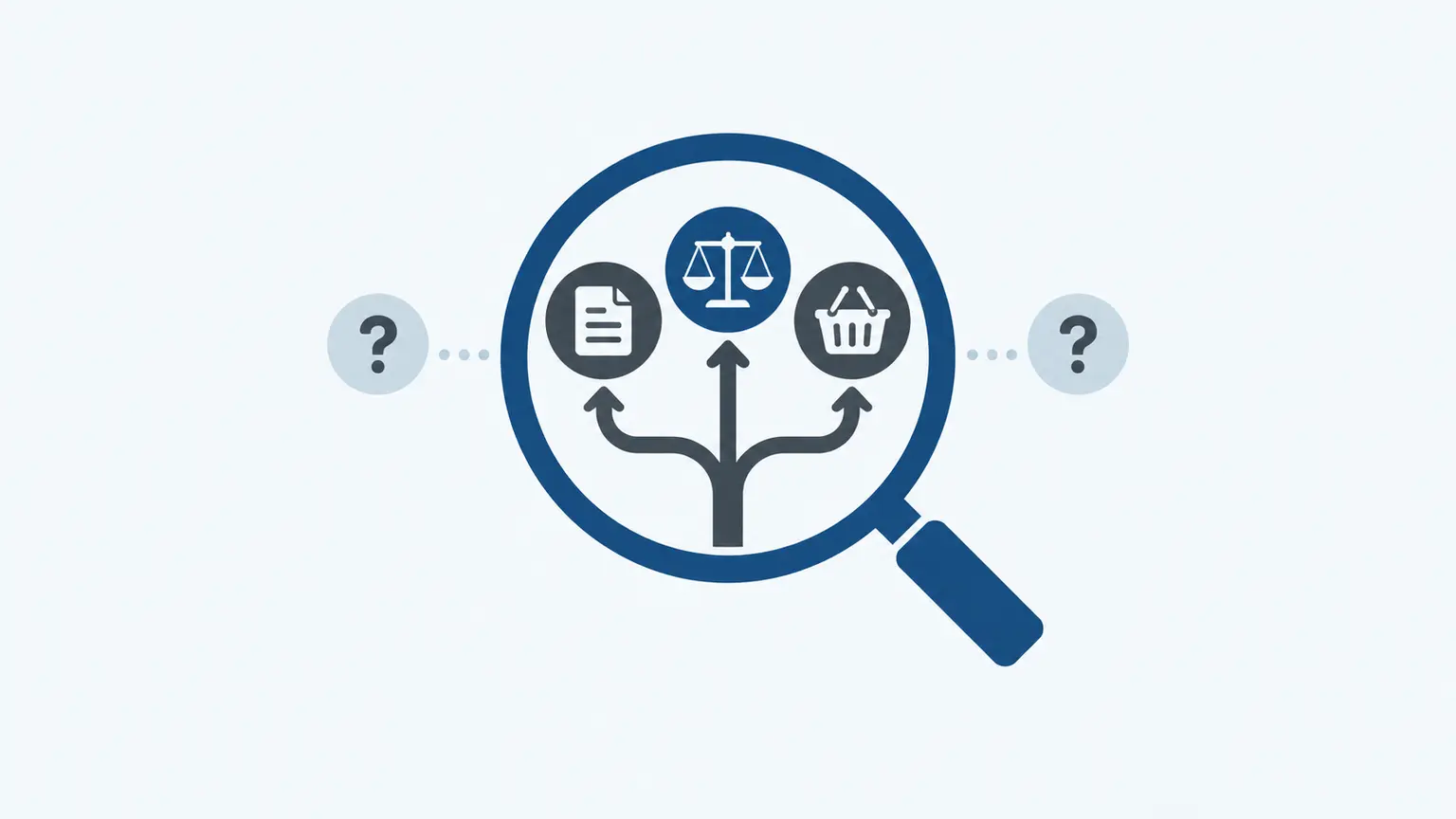
Marketers often group intent into four broad categories:
These categories are guides, not locked drawers. A query can carry mixed intent, and the same person may move between several types while researching. “CRM for construction companies” could indicate comparison, education and an eventual purchase.
A managed IT provider wants to rank for “cyber security audit”. It could publish a definition, a downloadable checklist, a service page or a software tool. To choose, the provider inspects the search engine results page and speaks to prospects about what they mean by the phrase.
If results mainly contain service pages and buyers use the query to find providers, a clear commercial page with scope, evidence and a suitable call to action fits. If results answer how to conduct an audit, a practical guide may serve better. The provider might need both pages for distinct queries, with internal links between them.
Intent guides page format, depth and language. Someone seeking a definition values a direct explanation. Someone comparing suppliers needs evidence, distinctions and selection criteria. Someone ready to enquire needs reassurance and a low-friction next step.
It also improves campaign economics. A paid advert promising an instant quote should not send researchers to a vague home page. Likewise, forcing a sales pitch into an early educational query can lose trust before the buyer has framed the problem.
Use intent to shape:
One mistake is inferring intent from a single keyword in isolation. Review related queries, live results, customer language and on-site behaviour. Another is treating search volume as permission to create an unsuitable page. A high-volume query with no plausible relationship to your expertise or offer rarely becomes valuable traffic.
Businesses also assume intent never changes. Search engines may reshape results as language, products and events evolve. Recheck priority queries periodically and whenever a previously successful page loses visibility or converts poorly.
Yes, when the needs genuinely overlap. A service page can define the service and help a buyer assess it. However, forcing unrelated educational and transactional needs onto one page can make both experiences weaker.
Inspect the current result types, read the pages that search engines favour, review related questions and compare the wording with conversations from real customers. These signals form a hypothesis that later performance can test.
Who wrote this

Steve founded Epitomise in 2017 after UK, international and global marketing leadership roles, most recently as Global CMO of the Vitec Group’s Videocom Division. He works with SME and technology businesses on strategy, positioning and the execution that follows — more about Steve.
Read next
Learn what A/B testing means, how a controlled marketing experiment works and which mistakes make test results unreliable.
Learn what answer engine optimisation means and how to make useful business content easier for search and AI systems to extract and cite.
Learn what bounce rate means, why analytics tools calculate it differently and how to diagnose a high bounce rate without guessing.
A short discovery call is usually enough to tell. No deck, no pitch.
Book a discovery call