Account-based marketing: focus effort on valuable accounts
A practical account-based marketing guide for selecting target accounts, coordinating sales and marketing, and measuring meaningful progress.

Marketing guides
Search engine marketing helps your business appear when somebody actively searches for a product, supplier, problem or answer. That makes it unusually valuable: instead of interrupting a broad audience, you can meet a potential customer at the point where their need becomes visible.
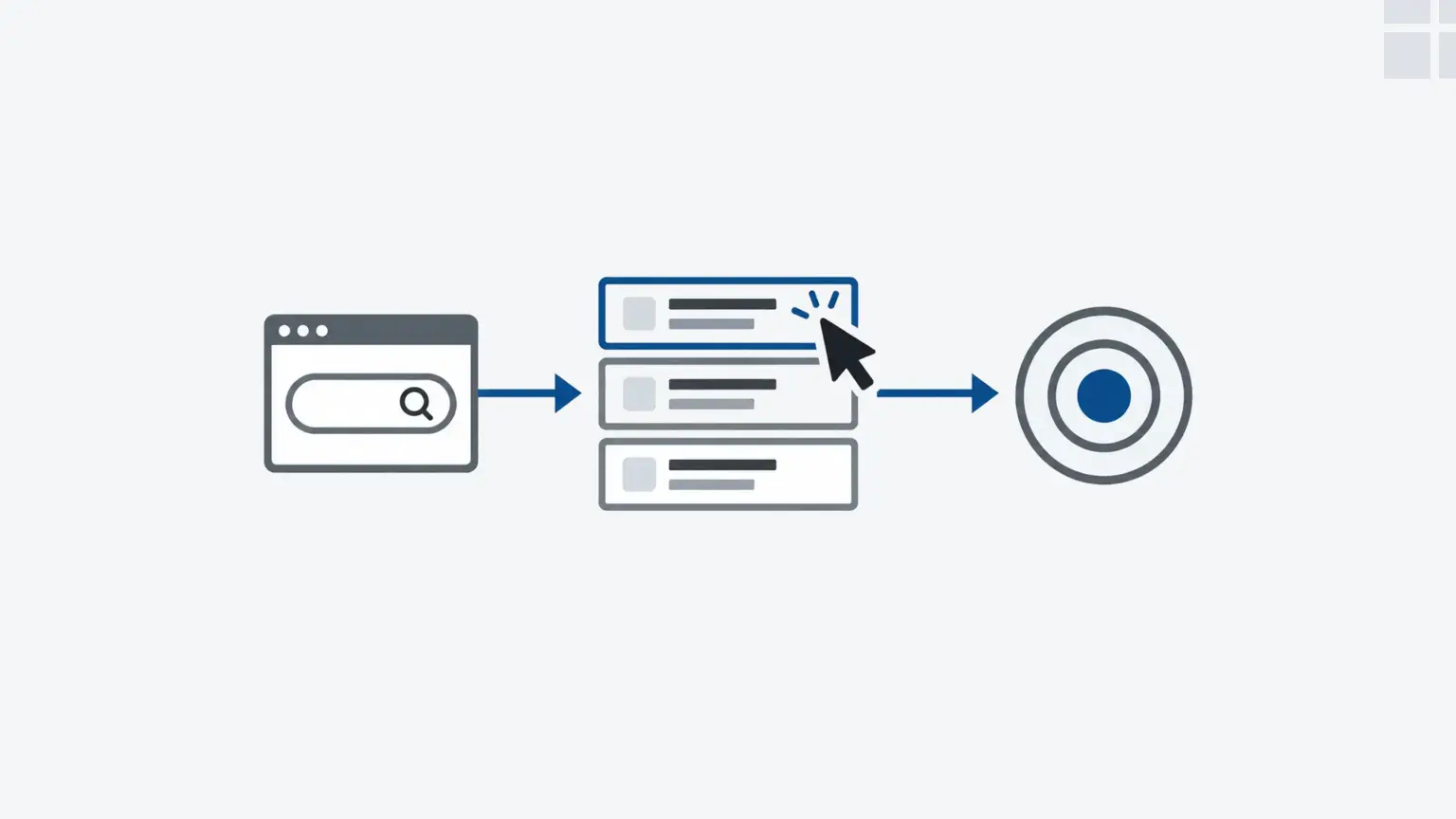
Search engine marketing covers two connected disciplines. Search engine optimisation, or SEO, aims to earn visibility in organic results. Paid search advertising buys visibility for selected searches. Paid campaigns can begin producing information quickly, while organic performance normally develops over time as search engines discover useful pages and gain confidence in the site.
The important unit is not simply the keyword. It is the need behind it. Somebody searching for “marketing consultant Birmingham” may be comparing providers; somebody searching “how to write a marketing plan” may be educating themselves; a search for the Epitomise name is navigational. Each deserves a different page and next step. This is the distinction between a keyword and search intent.
This guide develops the search channel described by Steve Ward in Part 3 of Execute Your Tech Idea: research what people seek, understand the competitive search environment and align the message with the customer’s need.
Search usually enters at discovery because the customer is trying to find help. It can also support exploration and evaluation when detailed articles, service pages, comparisons and evidence answer progressively harder questions.
For a simple, urgent purchase, a search advert might lead directly to a sale. A complex business service will normally require a longer customer buying journey: search, useful page, further evidence, conversation and then a decision. Your page should offer the next sensible step rather than demanding a commitment the visitor is not ready to make.
Search works particularly well when customers recognise their problem and use reasonably consistent language to investigate it. It also suits offers where a qualified enquiry is valuable enough to support either sustained content development or paid acquisition.
It becomes stronger when your expertise can answer specific questions better than generic competitors. A focused page about choosing marketing channels for a UK technology launch is more likely to help a relevant buyer than a vague page promising “marketing solutions”. Specificity improves both usefulness and qualification.
Paid and organic search can work together. Advertising tests which phrases and propositions attract suitable enquiries; those lessons can inform durable organic pages. Organic visibility can reduce dependence on paying for every visit, while paid search can retain coverage for competitive or time-sensitive terms.
Search wastes money when a business chases traffic without understanding intent. A high-volume phrase may attract students, jobseekers or consumers when you need business decision-makers. The resulting dashboard looks active while the pipeline remains stubbornly empty.
It also fails when the destination is weak. An advert can win the click, but an unclear, slow or unconvincing website becomes the “brick wall” Steve warns about: investment reaches the site and goes no further. Broad paid targeting, weak negative keywords and missing conversion tracking can compound the loss.
SEO is equally wasteful when content merely repeats what already ranks, is written for an algorithm rather than a reader, or targets subjects with no relationship to the services you can credibly provide.
Start with one commercially relevant customer problem. Interview customers or sales colleagues and record the actual language used before a purchase. Group candidate searches by intent: learning, comparing, finding a provider or taking action.
Choose one narrow cluster and build the best destination you can. State the problem clearly, answer the core question early, demonstrate experience and offer an appropriate next step. Link definitions such as value proposition where they help the reader, but keep the main page complete in its own right.
If you use paid search, begin with controlled targeting and a modest test budget. Review the queries that actually triggered adverts, exclude irrelevant searches and compare lead quality rather than celebrating clicks. If you pursue organic search, make the page accessible through internal links, answer related questions and revisit it as you learn from real conversations.
Measure visibility, impressions, click-through rate, landing-page engagement and completed actions, but connect these to qualified enquiries, opportunities and revenue. For paid activity, track cost per click, cost per qualified lead and customer acquisition cost. For organic activity, monitor relevant rankings and non-branded visits alongside conversions.
Segment branded and non-branded searches. Brand traffic often reflects work done by other channels, whereas non-branded discovery indicates that search is introducing you to people who did not already know the business.
Directories, review sites and procurement frameworks reinforce independent discovery and evaluation. Online expert sources can build authority and links. Display and video advertising can reconnect with previous visitors, while email marketing can continue the journey after somebody downloads or requests useful material.
If most answers are yes, search deserves a controlled test. If the audience does not yet recognise the problem, an outbound channel may need to create awareness before search can capture demand.
Who wrote this

Steve founded Epitomise in 2017 after UK, international and global marketing leadership roles, most recently as Global CMO of the Vitec Group’s Videocom Division. He works with SME and technology businesses on strategy, positioning and the execution that follows — more about Steve.
Read next
A practical account-based marketing guide for selecting target accounts, coordinating sales and marketing, and measuring meaningful progress.
How to plan outdoor advertising with a clear audience, location, message and measurement approach, from local posters to digital out-of-home.
How to use live chat, messaging and helpful sales conversations to reduce buyer friction while protecting trust and team capacity.
A short discovery call is usually enough to tell. No deck, no pitch.
Book a discovery call