Account-based marketing: focus effort on valuable accounts
A practical account-based marketing guide for selecting target accounts, coordinating sales and marketing, and measuring meaningful progress.

Marketing guides
Display and video advertising can put a message in front of people who are not currently searching for you. Its flexibility is also its danger: without a defined audience, purpose and destination, it can buy a remarkable quantity of activity with very little commercial consequence.
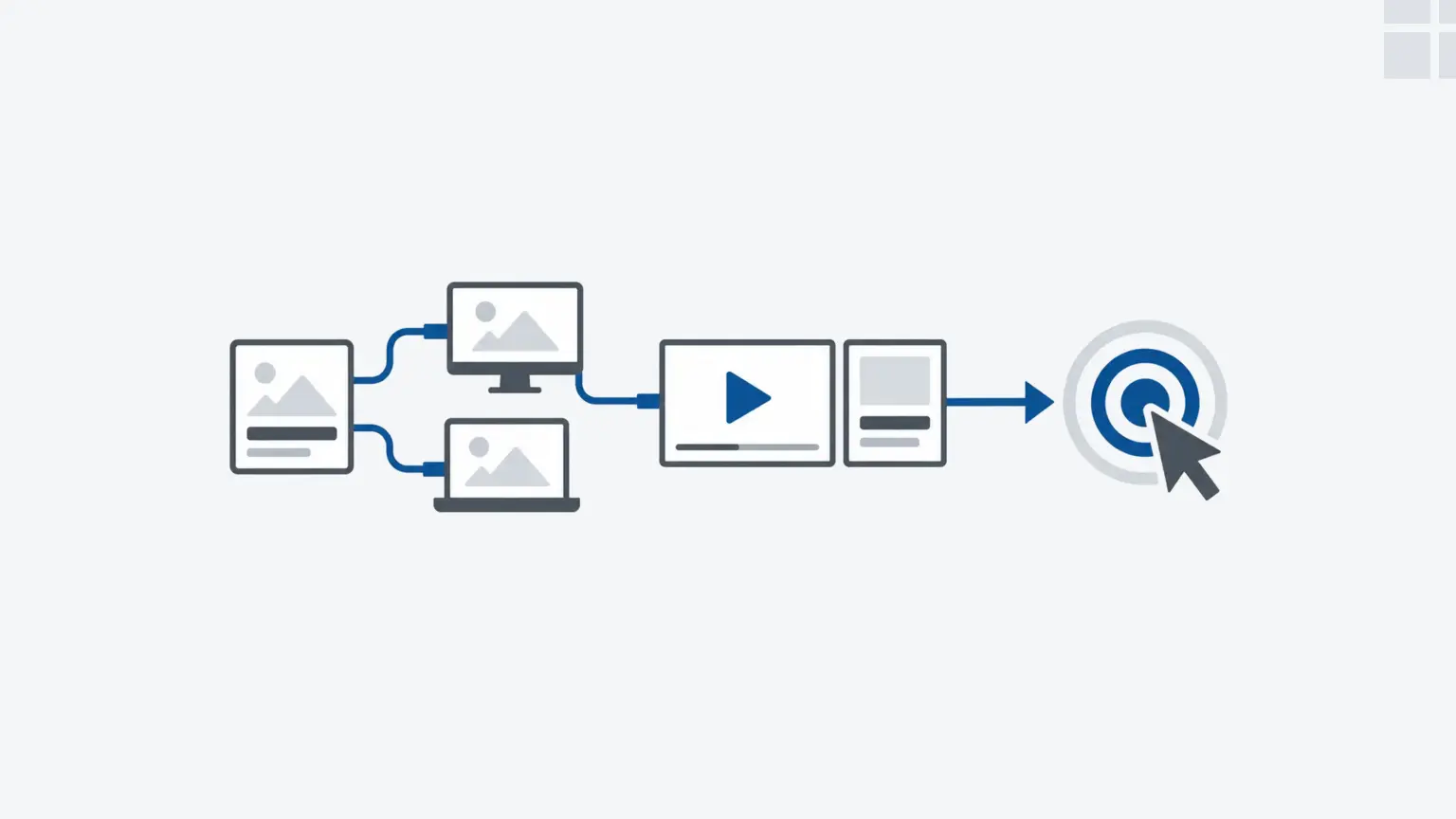
Display advertising uses text and images across websites, apps and digital networks. Video advertising places moving-image messages within video platforms or other inventory. Both are paid outbound channels, although remarketing reconnects with people who have already visited or engaged with the business.
Steve Ward’s Part 3 chapter in Execute Your Tech Idea outlines several useful targeting ideas: previous website visitors, people currently in a relevant market, custom groups based on interests or behaviour, audiences similar to known visitors, selected publications or channels, affinity groups and matched customer or company lists.
These are ways to narrow distribution, not a substitute for judgement. The campaign still needs a clear ideal customer profile, relevant message and credible next step.
Display advertising is strongest at discovery, where a concise message creates awareness or introduces a problem. Video can also support exploration and evaluation because it can demonstrate an idea, explain value or present evidence in more depth.
Remarketing sits later in the customer buying journey. A visitor who read a service page or guide has provided useful context, so the next advert can address a related question rather than repeat a generic introduction. Frequency and privacy still require careful management.
The channel works when you can identify where a target audience spends attention or define a sensible audience using available signals. Selected placements in a respected industry publication can provide context; a short demonstration can make an unfamiliar product easier to understand; remarketing can remind an interested visitor about a useful next step.
Display and video are also valuable when search cannot create awareness because customers do not yet recognise or name the problem. A strong message can prompt discovery, with search and website content capturing later investigation.
It becomes more effective when creative is built for one stage. Awareness advertising should make the problem and relevance memorable. Consideration creative should explain. Conversion creative should present a suitable action and reduce uncertainty.
Broad targeting can generate cheap impressions and clicks from people who will never buy. Optimising solely for cost per click often rewards curiosity or accidental interaction rather than commercial value.
Creative fails when it tries to explain the whole business in a small banner, uses video without a strong opening or sends every audience to the same homepage. Excessive remarketing can irritate people and damage the brand it was meant to reinforce.
Measurement can mislead too. A platform may claim credit for somebody who merely saw an advert before converting through another channel. Attribution should inform decisions, not turn every impression into an imaginary sale.
Choose one objective: relevant reach, content engagement, qualified enquiry or sale. Define the audience using observable characteristics connected to that objective. Select one offer and build a destination that continues the same message.
Create a small set of variations around one proposition. For display, make the central idea understandable quickly and keep the action clear. For video, earn attention at the beginning, show rather than merely claim where possible and match length to the buyer’s level of commitment.
Set a bounded test budget and duration. Confirm conversion tracking before launch. Exclude obvious irrelevant audiences and placements, then review where adverts actually appeared. Compare creative and audience segments using qualified outcomes, not just platform engagement.
If remarketing, divide visitors by meaningful behaviour. Somebody who briefly opened a blog post should not receive the same treatment as somebody who reviewed a service and requested pricing information.
For awareness, measure relevant impressions, target reach, frequency, video views and completion. For traffic and consideration, measure click-through, engaged visits and meaningful content actions. For conversion, track qualified enquiries, opportunities, revenue and customer acquisition cost.
Monitor CPM and cost per click as diagnostic measures, but do not confuse them with success. Review placement quality, audience quality and assisted influence alongside directly attributed conversions.
Search engine marketing captures demand after advertising creates awareness. Social media marketing and advertising adds platform-specific engagement and targeting. Email marketing nurtures people who opt in, while online expert sources and useful website content provide the substance that advertising promotes.
If you cannot answer those questions, buying impressions will not create clarity. Design the journey first, then use paid reach to accelerate it.
Who wrote this

Steve founded Epitomise in 2017 after UK, international and global marketing leadership roles, most recently as Global CMO of the Vitec Group’s Videocom Division. He works with SME and technology businesses on strategy, positioning and the execution that follows — more about Steve.
Read next
A practical account-based marketing guide for selecting target accounts, coordinating sales and marketing, and measuring meaningful progress.
How to plan outdoor advertising with a clear audience, location, message and measurement approach, from local posters to digital out-of-home.
How to use live chat, messaging and helpful sales conversations to reduce buyer friction while protecting trust and team capacity.
A short discovery call is usually enough to tell. No deck, no pitch.
Book a discovery call