Account-based marketing: focus effort on valuable accounts
A practical account-based marketing guide for selecting target accounts, coordinating sales and marketing, and measuring meaningful progress.

Marketing guides
Email gives you a direct way to continue a relationship with people who have chosen to hear from the business. It can educate, prompt a useful next step and retain customer attention, but only when messages reflect the recipient’s needs rather than the sender’s desire to broadcast.
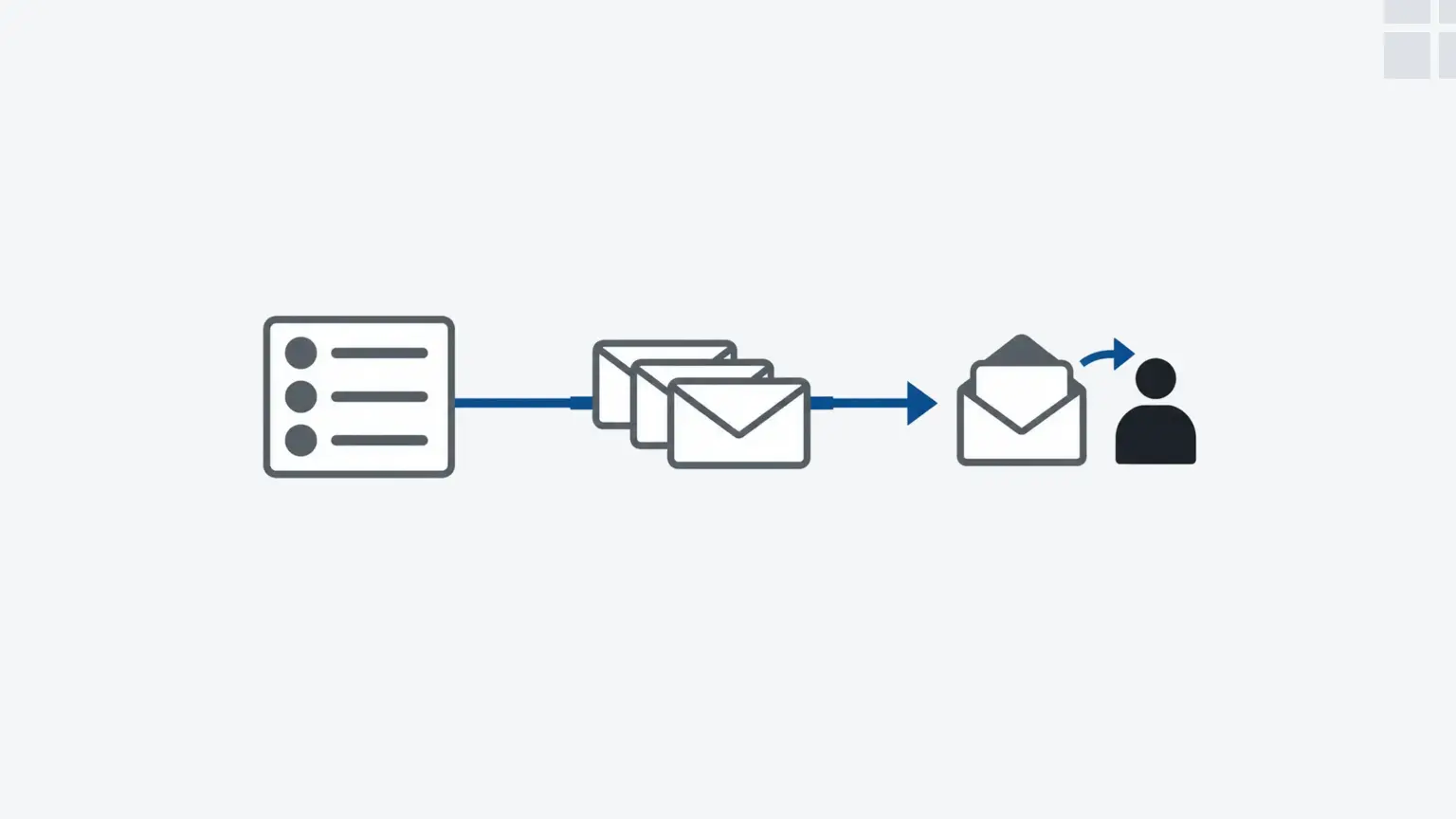
Email marketing includes individual campaigns, newsletters and planned nurture sequences. A marketing automation platform can trigger messages when somebody takes an action, reaches a stage, attends an event or remains inactive for a defined period.
Automation should deliver relevance at useful moments; it should not multiply weak messages. Steve Ward’s email channel in Part 3 of Execute Your Tech Idea stresses audience segmentation, concise subject lines and preview text, informative visual content, personalisation, planned calls to action, sensible intervals, mobile optimisation and testing.
The quality of the database matters as much as the email. A new business cannot assume it has an established audience. Contacts must be earned through customer relationships, useful resources, events and other legitimate routes, with consent and preferences handled appropriately.
Email is strongest during exploration and evaluation. It can help somebody move from a short article to a detailed guide, from a guide to a webinar, or from a webinar to a relevant conversation. It can also support purchase and retention through proposals, onboarding, useful updates and customer education.
Sequences form part of a marketing funnel, but recipients do not experience themselves as rows moving through a funnel. Each message must make sense based on what they know, what they have done and what they may need next.
Email works when the audience has a clear reason to receive it and segmentation reflects meaningful differences. A customer should not receive the same message as a new prospect; a finance director evaluating risk may need different evidence from an operational user exploring capability.
It works particularly well as connective tissue between channels. Search or social content can earn a resource signup; email can invite the reader to a relevant webinar; a follow-up can answer common evaluation questions and offer a conversation.
Email also provides a controlled way to test messages. A small audience can receive two subject lines, calls to action or content approaches before the stronger option is used more widely, provided the test changes one meaningful variable and the sample supports a useful conclusion.
It wastes effort when a business buys or accumulates a poorly understood list, then sends generic promotions to everybody. Low relevance creates disengagement, complaints and reputational damage rather than demand.
Over-automation is another common problem. A sequence may be logically tidy in software yet feel relentless to a human receiving it. Timing should reflect the scale and urgency of the decision, with clear ways to change preferences or stop messages.
Open rates alone can mislead because email clients and privacy features affect tracking. Even when accurate, an open says little about commercial progress. Attractive templates also cannot compensate for a weak value proposition or an irrelevant offer.
Choose one legitimate audience segment and one useful objective. Examples include helping guide-downloaders evaluate a problem, inviting existing customers to an educational event or re-engaging prospects who requested contact but paused.
Write down what the recipient already knows, what question comes next and what action would be proportionate. Build a short sequence only if several steps genuinely help. Every email should have a clear role: deliver the promised resource, explain one issue, provide evidence, answer a concern or invite the next conversation.
Use a concise subject line and preview that accurately represent the content. Put the main value early, write for a phone screen and use one primary call to action. Personalise information that changes relevance, not decorative fields inserted to prove the database knows somebody’s first name.
Test links, tracking, layout, sender details and preference controls. Send first to a small sample where appropriate, then inspect replies and downstream quality before expanding. Coordinate sales follow-up so positive responses receive prompt, human attention.
Monitor delivery, bounces, complaints and unsubscribes as list-health indicators. Use opens cautiously. Clicks, replies, resource use, registrations and booked conversations reveal more meaningful engagement.
Connect email activity to qualified leads, opportunities, customer retention and revenue. Measure progression by segment and campaign rather than blending newsletters, customer communication and sales nurture into one average. Include platform, content and staff costs when assessing return on marketing investment.
Search engine marketing and social media marketing and advertising can earn the initial opt-in. Webinars and podcasts provide valuable reasons to communicate. Social selling and telemarketing can add a human conversation once interest and context justify it.
Email performs best when it respects attention. Send fewer, more relevant messages and use the responses to improve what customers receive next.
Who wrote this

Steve founded Epitomise in 2017 after UK, international and global marketing leadership roles, most recently as Global CMO of the Vitec Group’s Videocom Division. He works with SME and technology businesses on strategy, positioning and the execution that follows — more about Steve.
Read next
A practical account-based marketing guide for selecting target accounts, coordinating sales and marketing, and measuring meaningful progress.
How to plan outdoor advertising with a clear audience, location, message and measurement approach, from local posters to digital out-of-home.
How to use live chat, messaging and helpful sales conversations to reduce buyer friction while protecting trust and team capacity.
A short discovery call is usually enough to tell. No deck, no pitch.
Book a discovery call