Account-based marketing: focus effort on valuable accounts
A practical account-based marketing guide for selecting target accounts, coordinating sales and marketing, and measuring meaningful progress.

Marketing guides
Social selling uses professional-network information to find relevant companies and people, understand what matters to them and build a credible relationship. It is most effective when it feels like informed business development—not a connection request followed seconds later by a generic sales pitch.
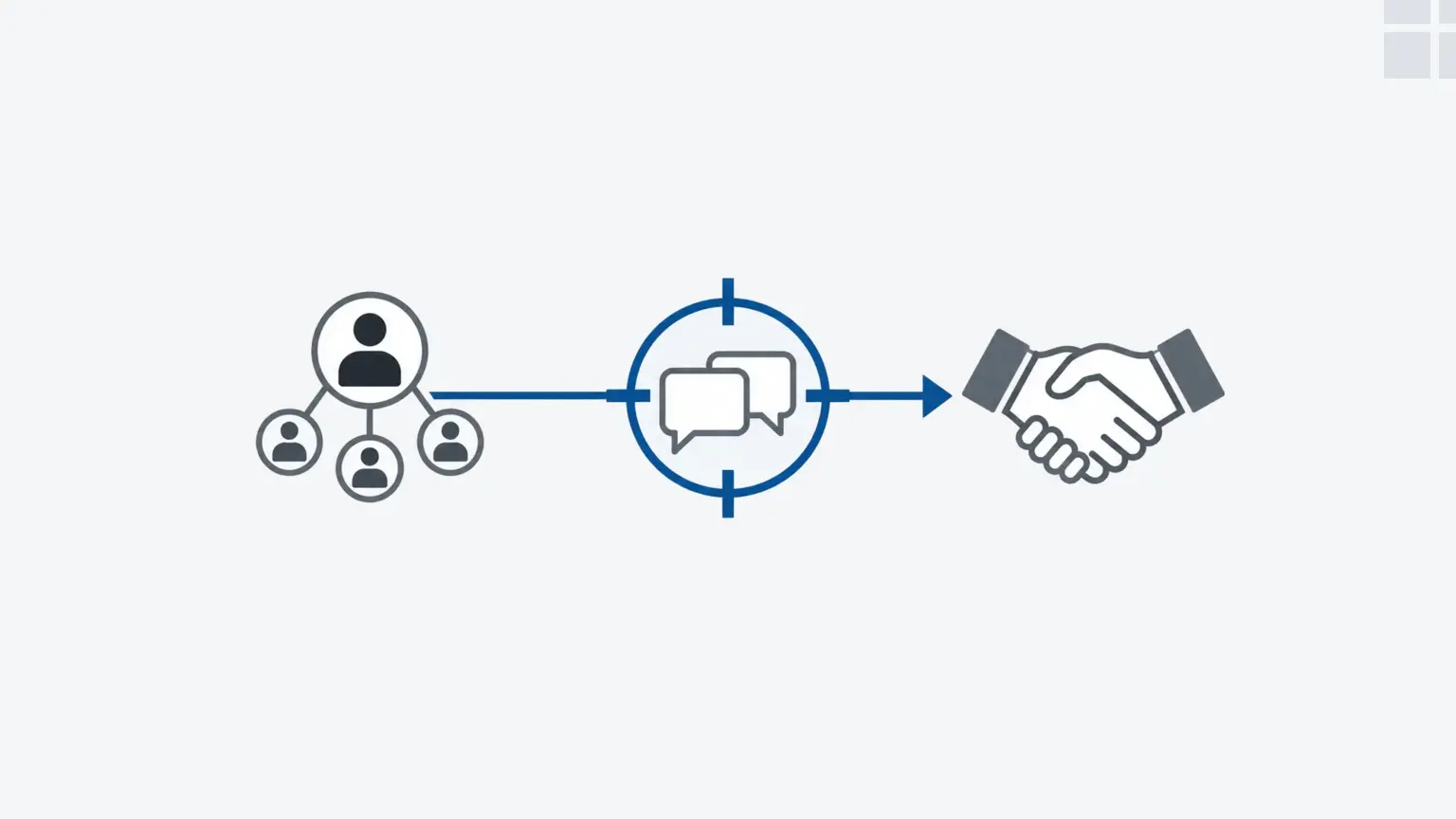
Social selling combines account research, contact identification, monitoring, content and one-to-one interaction. LinkedIn is particularly useful in business-to-business markets because its company and employee information can help identify organisations, decision-makers and influencers.
Lists and alerts can reveal reasons to engage: company news, funding, senior appointments, role changes, published posts, profile views or interaction with your content. These signals create context, although they do not grant permission to manufacture familiarity or claim intent that is not there.
Steve Ward’s social selling channel in Part 3 of Execute Your Tech Idea describes a sustained process: profile targets, research companies, identify stakeholders, earn the connection, share valuable content, monitor alerts and nurture relationships carefully.
Social selling mainly supports discovery and exploration. It can introduce your expertise to somebody who was not actively searching and then help them understand your relevance over time. Later engagement may support evaluation, but a social network should connect into a wider customer buying journey with useful evidence and real conversations.
It is especially relevant to complex business purchases involving several stakeholders. Mapping the decision-making unit helps you avoid treating one contact as the entire account.
It works when you can define a relatively narrow set of valuable accounts and identify the people likely to experience, influence or approve the need. The approach is well suited to offers where research and personalisation are justified by potential customer value.
It becomes stronger when you publish credible material. Once connected, relevant decision-makers may see your observations and examples in their normal feed. Their own activity can then reveal interests and create natural opportunities for discussion.
Social selling also integrates well with real signals from other channels. A known company reading a relevant website page, attending an event or engaging with a webinar may warrant careful research and follow-up. The signal should guide relevance, not trigger an alarming “we saw you looking” message.
It wastes time when target definitions are loose and sellers accumulate connections with people who cannot benefit from the offer. More connections can increase apparent reach while making the network less commercially useful.
Generic automation damages the central asset: trust. Formulaic comments, false personalisation and immediate pitches teach recipients to ignore you. Subscription tools cannot rescue an approach that lacks a credible reason for contact.
The channel also fails when responsibility ends at the accepted connection. Without useful content, monitoring and patient follow-up, the business has collected access rather than developed a relationship.
Start with a focused ideal customer profile: sector, size, geography, situation and likely need. Select perhaps twenty accounts that clearly match it. For each, identify the people who may own the problem, assess options, approve expenditure or use the solution.
Improve your profile before outreach. It should communicate the problems you help solve, establish appropriate credibility and make further exploration easy. Then research each person and company for a genuine connection point. Relevant shared interests, thoughtful reaction to their work, attendance at the same event or a useful question can earn attention; merely inhabiting the same database cannot.
Send a concise request without disguising a sales proposal as friendship. After connection, avoid rushing. Engage where you have something worthwhile to add, share material that addresses their likely concerns and monitor meaningful developments. When a business conversation becomes appropriate, suggest a proportionate next step.
Record activity in the CRM at account level. Coordinate colleagues so several people do not contact the same executive with conflicting messages.
Measure target accounts researched, appropriate stakeholders identified, connection acceptance, substantive replies, conversations, meetings, qualified opportunities and influenced pipeline. Separate activity involving target accounts from total platform activity.
Review progression and time invested. A low-volume campaign that produces relevant executive conversations may outperform mass outreach despite generating fewer replies. Track content engagement by target people where responsibly available, but do not over-interpret a single view or reaction.
Account-based marketing coordinates messages across stakeholders and channels. Networking and communities provides real-world context and introductions. Social media marketing and advertising supplies the wider content and reach, while telemarketing can progress a conversation when a call has been appropriately earned.
Social selling is not a shortcut around relationship-building. It is a well-informed way to begin it, using better context to make each interaction more relevant.
Who wrote this

Steve founded Epitomise in 2017 after UK, international and global marketing leadership roles, most recently as Global CMO of the Vitec Group’s Videocom Division. He works with SME and technology businesses on strategy, positioning and the execution that follows — more about Steve.
Read next
A practical account-based marketing guide for selecting target accounts, coordinating sales and marketing, and measuring meaningful progress.
How to plan outdoor advertising with a clear audience, location, message and measurement approach, from local posters to digital out-of-home.
How to use live chat, messaging and helpful sales conversations to reduce buyer friction while protecting trust and team capacity.
A short discovery call is usually enough to tell. No deck, no pitch.
Book a discovery call