Account-based marketing: focus effort on valuable accounts
A practical account-based marketing guide for selecting target accounts, coordinating sales and marketing, and measuring meaningful progress.

Marketing guides
Networking works when it creates relevant relationships, learning and introductions—not when a roomful of salespeople take turns delivering rehearsed pitches at one another. The commercial value comes from choosing the right community, contributing usefully and following promising conversations beyond the event.
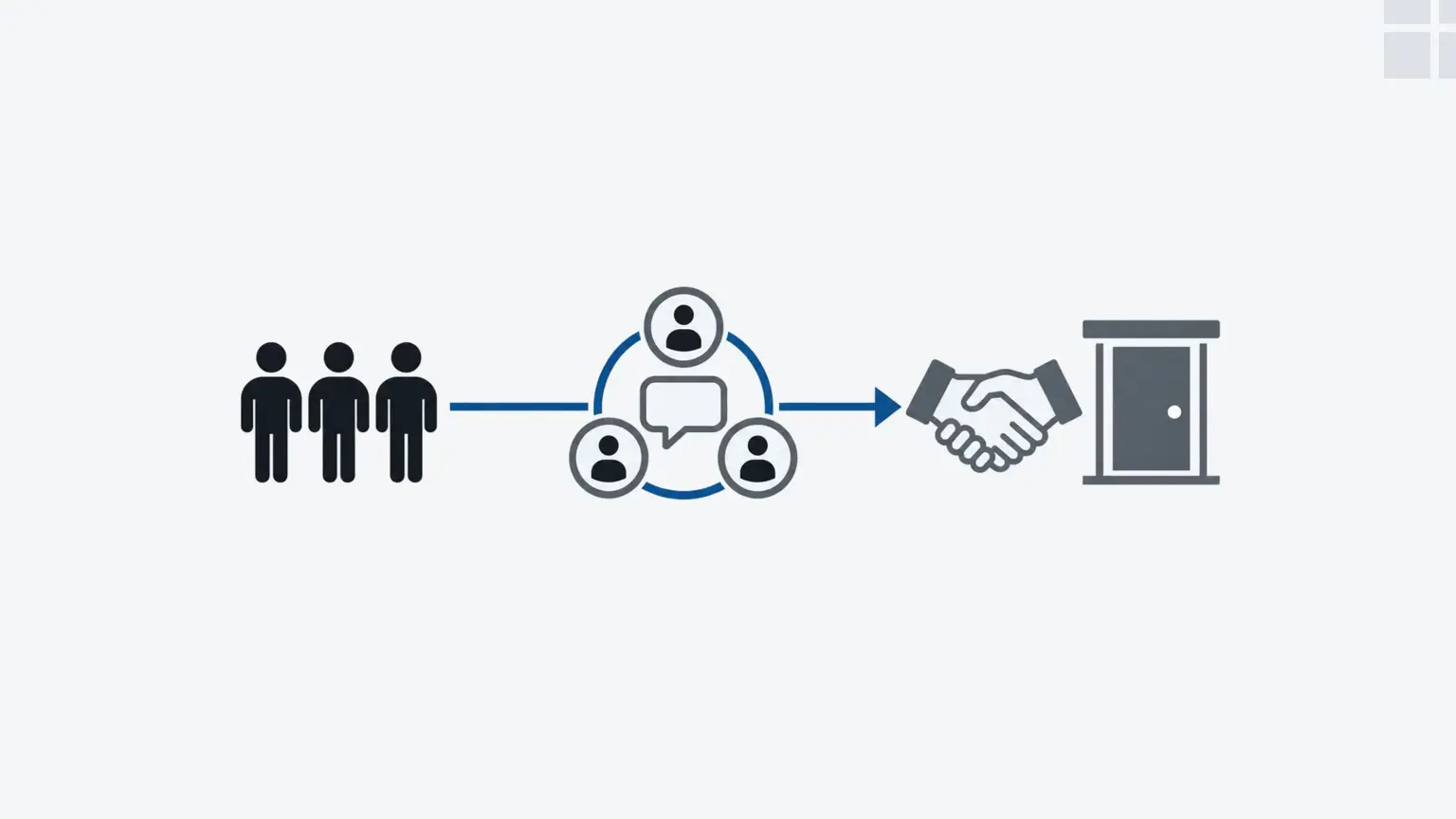
This channel includes face-to-face business groups, structured referral organisations, informal gatherings and online professional communities. Formats differ, but all create an environment where people exchange ideas, ask for help, learn about one another’s work and build familiarity over time.
Some networks require members to pass and record opportunities. Others are deliberately informal. Online communities may require approval or allow open participation. None is automatically valuable because it is large or active; the important question is whether the people involved overlap with your customers, partners or credible introducers.
Steve Ward’s chapter in Part 3 of Execute Your Tech Idea emphasises thoughtful participation. The more you contribute to a relevant community, the more likely you are to learn, build trust and become someone members feel comfortable approaching.
Networking chiefly supports discovery and exploration. A buyer may first hear your perspective in a discussion, then investigate the business, read your material or arrange a conversation. The relationship can later influence evaluation because familiarity lowers uncertainty, but networking should not be confused with a complete sales process.
Communities also reveal how customers describe their problems. That intelligence can improve your ideal customer profile, message and value proposition across every other channel.
Networking works when your target market values relationships and the group includes genuine decision-makers, practitioners or trusted advisers. It is particularly useful for complex business services where customers buy confidence in the people as well as the deliverable.
It can produce value before it produces a lead. A candid discussion may uncover a market problem, refine an offer or introduce a partner. Consistent participation lets members see how you think and whether you are dependable; those observations make later introductions safer.
The channel also suits businesses with strong subject expertise. Useful contributions, roundtables and short educational talks give other members a reason to remember and recommend you without turning every interaction into a sales ambush.
It wastes time when the room contains few relevant people and many sellers pursuing the same small pool. Membership fees are only part of the cost; preparation, travel, attendance and follow-up all consume senior time.
Unprepared attendance produces random conversations. Turning up without reviewing who will be present, talking mainly with colleagues and leaving with a pile of unqualified business cards creates activity rather than progress.
Online communities fail for similar reasons. Repeated self-promotion damages trust, while passive membership creates no visibility. A group can also be interesting without being commercially relevant, which is pleasant but should not be mislabelled as a growth strategy.
Choose one network or community closely connected to a defined market. Review its purpose, membership, event format and examples of past discussion. If possible, attend once as a guest before making a longer commitment.
Before an event, obtain the attendee list and select three to five people with whom a conversation could be mutually useful. Research them briefly. A short message saying you noticed they will attend and would value hearing about a relevant issue is more natural than a disguised appointment request.
Prepare a concise explanation of whom you help, the problems you address and why the subject matters, but spend more time asking and listening. Record meaningful context afterwards, connect through the appropriate platform and send a specific follow-up. If you promised an introduction or resource, deliver it promptly.
For an online community, begin by answering questions and sharing useful experience. Observe its norms before posting your own material. Over several weeks, note recurring problems and the people whose work complements yours.
Measure relevant conversations, agreed follow-ups, introductions, meetings, opportunities and revenue influenced. Also record useful qualitative outcomes: repeated customer problems, offer feedback, partner possibilities and invitations to contribute.
Review performance over a sensible period because relationships rarely mature in a single meeting. Compare the result with the complete cost in time and money. If attendance remains enjoyable but commercially weak, decide consciously whether it is personal development rather than marketing.
Social selling extends an offline conversation into an ongoing professional relationship. Referral marketing creates a more deliberate introduction process. Public speaking, sponsorship and awards can make contribution visible to the whole group, while email marketing can distribute genuinely requested resources or invitations.
Good networking is selective and generous, but it is not vague. You can build genuine relationships and still evaluate whether the channel supports the business aims you set for it.
Who wrote this

Steve founded Epitomise in 2017 after UK, international and global marketing leadership roles, most recently as Global CMO of the Vitec Group’s Videocom Division. He works with SME and technology businesses on strategy, positioning and the execution that follows — more about Steve.
Read next
A practical account-based marketing guide for selecting target accounts, coordinating sales and marketing, and measuring meaningful progress.
How to plan outdoor advertising with a clear audience, location, message and measurement approach, from local posters to digital out-of-home.
How to use live chat, messaging and helpful sales conversations to reduce buyer friction while protecting trust and team capacity.
A short discovery call is usually enough to tell. No deck, no pitch.
Book a discovery call