Account-based marketing: focus effort on valuable accounts
A practical account-based marketing guide for selecting target accounts, coordinating sales and marketing, and measuring meaningful progress.

Marketing guides
Public speaking, event sponsorship and awards can give a business something that advertising cannot manufacture on demand: borrowed authority. The organiser, audience or judging panel has created the setting, and your job is to earn attention within it. Used well, these channels put expertise in front of a defined market and give sales teams credible reasons to start conversations. Used badly, they produce an expensive logo, a trophy nobody understands or a talk that ends when the applause does.
Part 3 of Execute Your Tech Idea groups these activities with the marketing channels available to a growing business. That is the right way to view them. They are not ceremonial extras. They are routes to a market, and they need an audience, an offer and a follow-up plan like any other channel.
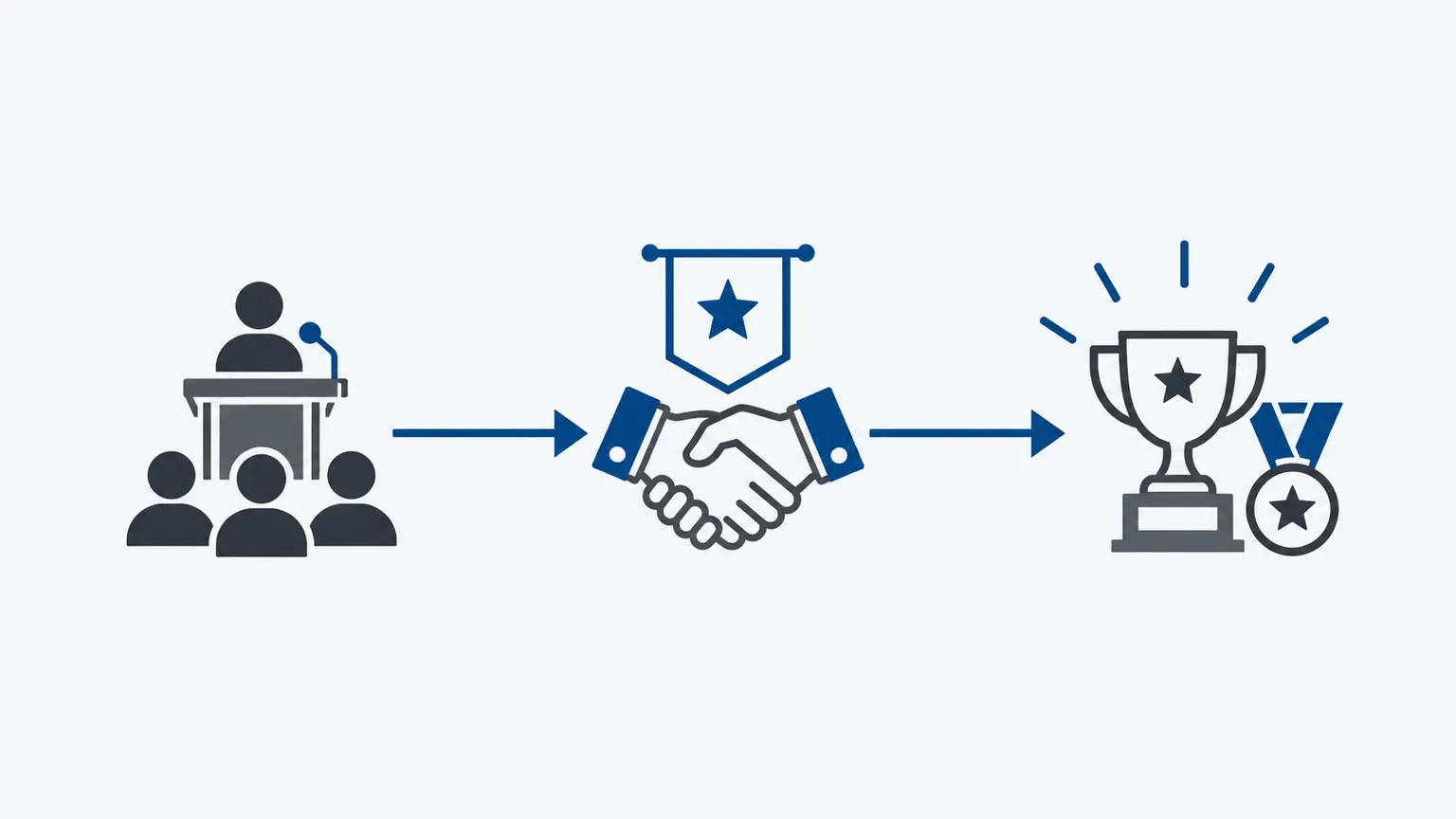
Speaking works when your buyer needs confidence in your judgement before they will consider your service. It suits complex purchases, emerging categories and businesses where expertise is part of the product. A ten-minute explanation of a difficult decision can reveal more than a page of claims about being “innovative”.
Sponsorship works when an organiser has already gathered a useful audience and can give you meaningful access to it. That access might be a workshop, research partnership, attendee opt-in, hosted discussion or useful presence in the event programme. A large logo behind the coffee machine may be pleasant, but it is not a strategy.
Awards work when the award carries trust into a buying decision. A credible, relevant award can support proposals, recruitment, partner conversations and press activity. A vague badge from an unknown scheme usually does the opposite. Buyers are not obliged to be impressed because you paid the entry fee.
Before committing, write down the audience you want to reach, the belief you want to change and the next action you want someone to take. If the opportunity cannot help with those three things, decline it.
The strongest approach uses one clear argument rather than three disconnected campaigns. Start with a problem your market recognises and a view that helps people make a better decision. Turn that into a talk, support it with evidence, and enter the resulting work into a relevant award only when you can show what changed.
For a speaking proposal, give the organiser a precise audience promise. “Five mistakes manufacturers make when choosing a channel partner” is more useful than “Thought leadership in modern marketing”. Explain what attendees will know or be able to do afterwards. Keep the company introduction short; the audience came for the subject.
For sponsorship, negotiate around the audience experience. Ask what attendees receive, where you can contribute expertise and what data can be shared lawfully. Useful options include a practical clinic, a benchmark report, a hosted discussion or a follow-up resource. Make sure the organiser can describe the audience by role, sector, company size and geography.
For awards, read the scoring criteria before writing. Answer each criterion with evidence and make the judge’s job easy. State the starting position, the action, the result and the source of the result. Do not turn an entry into a brochure. If confidentiality limits the evidence, decide whether the remaining case is still strong enough before paying.
Work backwards from the event or entry deadline. Confirm the central argument first, then create the talk, landing page, follow-up resource and sales briefing from the same material.
For a live event, decide how people will continue the conversation. A short, memorable URL or QR code can lead to the slides, a checklist or a relevant guide. Keep the form proportionate to the value offered. Brief the team on who should follow up, what they should say and how quickly they should act.
Afterwards, turn the talk into an article or insight, a short video, several answers to common questions and material for proposals. Add a credible award to the relevant service and client evidence pages, with enough context for the badge to mean something.
Track activity at three levels:
Record the source in your CRM, but accept that these channels often assist rather than close a sale by themselves. Ask prospects what gave them confidence and note when a talk, event or award appears in the answer. Review the cost per qualified conversation and the value of content you can reuse, not merely the cost per attendee.
Speaking and sponsorship become stronger when supported by content marketing and a clear go-to-market plan. Awards need credible case studies, while an event campaign often needs email, social and direct sales follow-up. If the positioning is vague, fix the strategy and message before buying attention.
Sometimes, but treat the fee as media spend rather than as recognition. Ask what audience you receive, whether the session is clearly labelled as sponsored and what follow-up rights are included. An earned editorial slot usually carries more authority, while a paid workshop may still work if the audience and commercial path are strong.
Look at who runs it, who judges it, how winners are selected and whether your buyers recognise it. Transparent criteria and respected independent judges matter more than the number of categories. Be cautious when nearly every entrant can buy a winner package.
Prepare it before the event. The landing page, resource, CRM fields, owner and first follow-up message should all be ready before anyone travels. Interest cools quickly, and improvising the process afterwards usually loses the best conversations.
If you need to decide whether an event opportunity deserves budget, talk to Epitomise about the audience, message and commercial path before you commit.
Who wrote this

Steve founded Epitomise in 2017 after UK, international and global marketing leadership roles, most recently as Global CMO of the Vitec Group’s Videocom Division. He works with SME and technology businesses on strategy, positioning and the execution that follows — more about Steve.
Read next
A practical account-based marketing guide for selecting target accounts, coordinating sales and marketing, and measuring meaningful progress.
How to plan outdoor advertising with a clear audience, location, message and measurement approach, from local posters to digital out-of-home.
How to use live chat, messaging and helpful sales conversations to reduce buyer friction while protecting trust and team capacity.
A short discovery call is usually enough to tell. No deck, no pitch.
Book a discovery call