Account-based marketing: focus effort on valuable accounts
A practical account-based marketing guide for selecting target accounts, coordinating sales and marketing, and measuring meaningful progress.

Marketing guides
Referral marketing turns earned trust into relevant introductions. It works best when customers and contacts genuinely understand whom you help, have confidence in the experience you provide and can recommend you without taking a reputational risk.
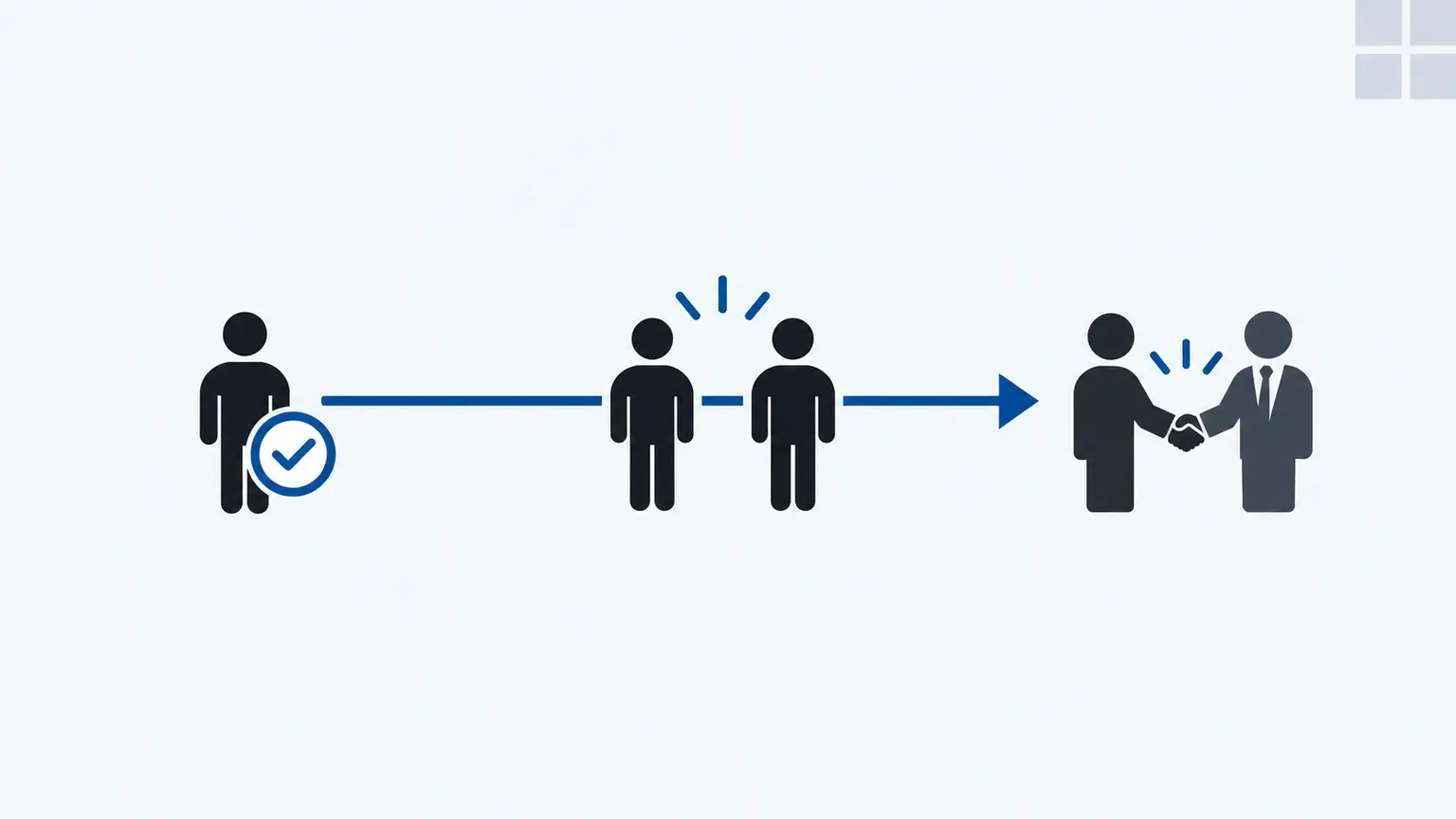
Referral marketing is a deliberate approach to encouraging and supporting recommendations from customers, professional contacts, employees or other advocates. The referrer connects a person or organisation with a business that may be able to help.
It differs from affiliate marketing because the relationship is commonly based on trust and suitability rather than a commission for tracked transactions. It also differs from a review: a public rating helps unknown buyers, while a referral usually introduces identifiable parties.
The system can be informal, such as asking a satisfied client for an introduction at an appropriate moment, or structured, with clear criteria, materials, tracking and rewards. Whatever the format, disclose incentives where they could affect how a recommendation is understood.
A referral often compresses early stages of the journey. The prospect may begin with awareness, context and some transferred trust because the referrer has explained why the business might fit. It does not remove the need for qualification or evidence.
Referrals can also influence evaluation. A buyer may ask peers about shortlisted suppliers, read customer stories or speak to an existing client. A strong delivery experience therefore supports future acquisition long after the original sale.
Part 3 of Execute Your Tech Idea places referrals among a wider choice of channels. They complement a clear website, useful case studies and partner marketing. Those assets help the referred prospect validate what they have heard without forcing the referrer to explain everything.
Referral marketing works when trust strongly influences purchase, customers can recognise a suitable prospect and the business consistently delivers an experience worth recommending. It is especially valuable in specialist services and considered purchases where perceived risk is high.
It underperforms when the ideal referral is vague, asking feels awkward or the referred experience disappoints. A generous incentive may generate volume from poorly matched prospects and encourage advocates to overstate the offer. That wastes everybody’s time and can erode the very trust the channel depends on.
Do not assume happy customers will remember to refer at the right moment. Give them simple language, a recognisable problem and an easy introduction method. Equally, do not turn every positive interaction into an immediate request. Timing should respect the relationship.
First describe a good referral in plain language: the type of organisation or person, the situation they face and why an introduction could be useful. Avoid a long list of demographic filters that no customer will remember.
Then:
Provide a short introduction template as an option, not a compulsory script. The referrer should retain their own voice. If regulated services or incentives are involved, obtain specific advice and communicate terms clearly.
Track active referrers, introductions, qualified referrals, meetings, conversion rate, sales value, time to close and customer quality. Compare referral performance with other sources, while allowing for small numbers and different types of opportunity.
Measure the customer experience too. Time to first response, qualification quality and feedback from referrers can reveal whether the process protects the relationship. A high conversion rate is not a victory if referrers feel ignored or prospects feel pressured.
Use consistent source capture in the CRM. Ask how the prospect heard about you and record the person or relationship involved, with appropriate privacy controls. This avoids crediting a later branded search as the sole source.
Sometimes, but payment changes the nature of the recommendation and may encourage poor-fit introductions. Consider whether recognition, reciprocal value or a simple thank-you better suits the relationship, and disclose material incentives appropriately.
Ask after you have delivered recognisable value and when the customer can confidently describe it. A successful milestone, positive review or unsolicited compliment can create a natural opening, but use judgement rather than an automatic trigger.
Who wrote this

Steve founded Epitomise in 2017 after UK, international and global marketing leadership roles, most recently as Global CMO of the Vitec Group’s Videocom Division. He works with SME and technology businesses on strategy, positioning and the execution that follows — more about Steve.
Read next
A practical account-based marketing guide for selecting target accounts, coordinating sales and marketing, and measuring meaningful progress.
How to plan outdoor advertising with a clear audience, location, message and measurement approach, from local posters to digital out-of-home.
How to use live chat, messaging and helpful sales conversations to reduce buyer friction while protecting trust and team capacity.
A short discovery call is usually enough to tell. No deck, no pitch.
Book a discovery call