What is A/B testing?
Learn what A/B testing means, how a controlled marketing experiment works and which mistakes make test results unreliable.

Marketing glossary
Your target audience tells you who a particular marketing activity needs to reach. Defining it prevents vague messages aimed at “businesses” or “homeowners” and gives the team something concrete against which to judge copy, creative and channel choices.
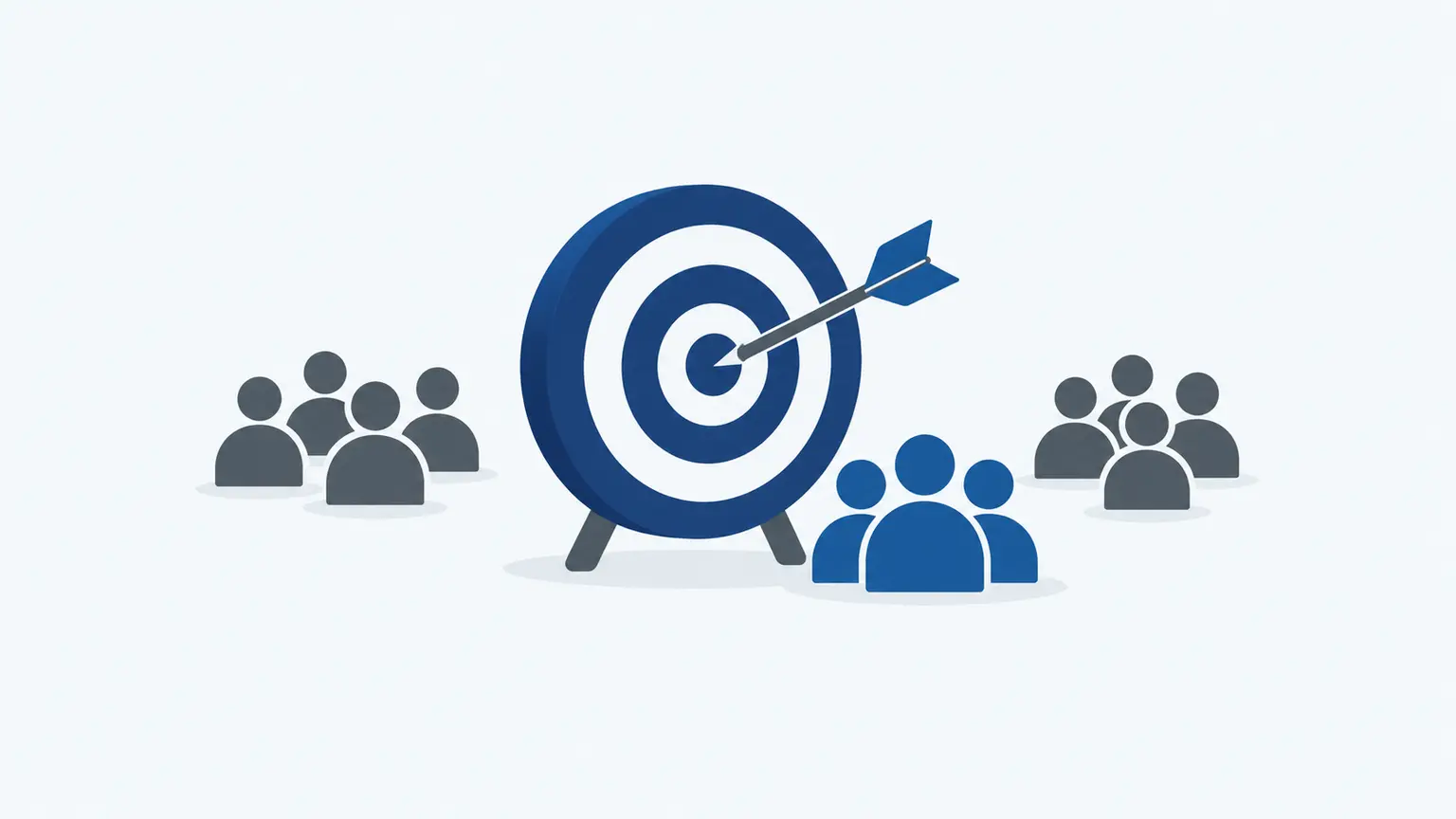
A target audience is a group of people who share characteristics relevant to one campaign, offer or communication. Those characteristics can include their role, problem, location, behaviour, priorities, level of knowledge and place in the buying decision.
The definition should fit the decision you are making. A company-wide strategy may work with broad market segments. A campaign needs a more precise audience because a finance director, technical evaluator and daily user may all influence the same purchase for different reasons.
Demographics alone rarely explain enough. Knowing that somebody is aged 35–54 or works in the Midlands says little about why they would act. Useful audience definitions include the situation, need or task that makes the message relevant.
Imagine an IT support company offering a cyber-security assessment. “UK SMEs” is too broad to guide a campaign. A more useful target audience might be operations directors at 50–250-person professional-services firms that handle client-confidential information and face security questions during tenders.
That definition changes the marketing. The message can focus on answering client assurance questions and finding practical gaps, rather than explaining cyber security from first principles. LinkedIn, partner introductions and decision-stage search may be more appropriate than a broad consumer channel.
The same offer may need a second audience: an internal IT manager who will assess whether the recommendations are technically sensible. The business can keep one proposition while adapting the evidence and language for each buying role.
A specific audience improves relevance. It helps you decide which problem to lead with, what the reader already understands, which objections to address and where the message is likely to reach them.
It also makes exclusion possible. An audience definition that includes everyone protects nobody from wasted effort. Smaller businesses in particular need to concentrate a limited budget where a credible need and route to purchase exist.
Do not confuse the person seeing an advert with the person making the whole decision. B2B purchases often involve a champion, user, technical assessor, budget holder and sceptic. Treating one audience as the complete buyer can leave important questions unanswered.
Avoid inventing motives from surface characteristics. Research customer conversations, sales notes, search behaviour and lost opportunities. A neat audience description built only in a workshop may be internally consistent and commercially wrong.
Yes. Different offers, campaigns and buying roles may require different audiences. The discipline lies in naming which audience each communication serves rather than combining them into one catch-all message.
It should be narrow enough to change what you say or where you say it, but large and reachable enough to support the commercial goal. If removing a characteristic would not alter the marketing, that characteristic may not be useful.
Who wrote this

Steve founded Epitomise in 2017 after UK, international and global marketing leadership roles, most recently as Global CMO of the Vitec Group’s Videocom Division. He works with SME and technology businesses on strategy, positioning and the execution that follows — more about Steve.
Read next
Learn what A/B testing means, how a controlled marketing experiment works and which mistakes make test results unreliable.
Learn what answer engine optimisation means and how to make useful business content easier for search and AI systems to extract and cite.
Learn what bounce rate means, why analytics tools calculate it differently and how to diagnose a high bounce rate without guessing.
A short discovery call is usually enough to tell. No deck, no pitch.
Book a discovery call