What is A/B testing?
Learn what A/B testing means, how a controlled marketing experiment works and which mistakes make test results unreliable.

Marketing glossary
A SERP is no longer ten identical blue links arranged in a tidy queue. Search engines assemble different result types for each query, which changes what visibility means and where a potential customer may click.
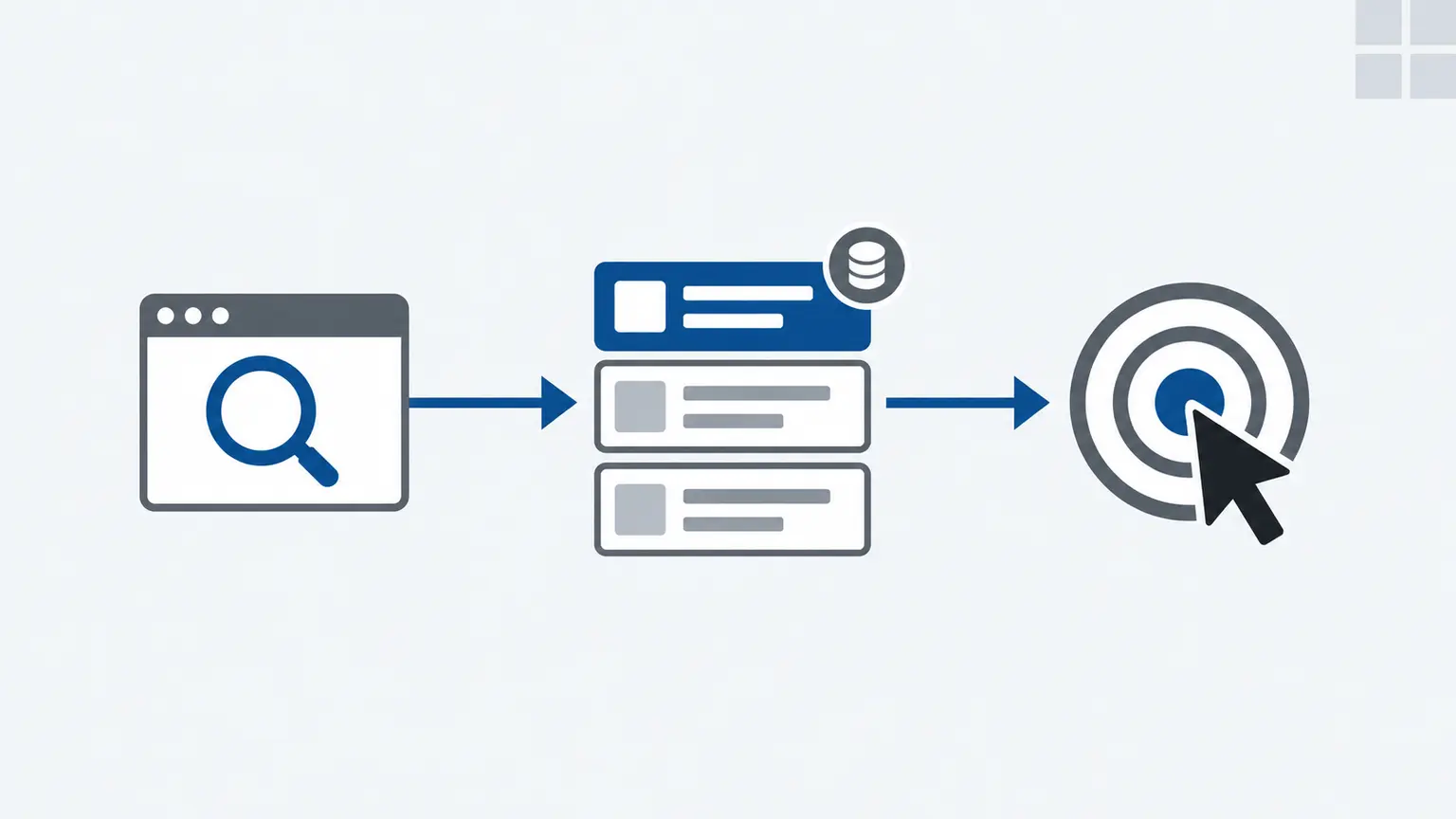
The elements depend on the query. Common components include:
A results page for “accountant near me” may prioritise a map, reviews and local firms. “How is VAT calculated?” may prompt a direct answer and explanatory pages. A product query may show shopping results before ordinary listings. That composition reveals clues about search intent.
Suppose a manufacturer searches for “commercial heat pump installer Birmingham”. An installer might appear in a paid advert, the local map results and the organic listings. Each position comes from a different system: paid-search bidding, local business information and organic relevance respectively.
The installer should inspect the actual SERP before creating a page. If Google mainly shows service pages from local providers, publishing a generic dictionary article is unlikely to satisfy the same need. A location-specific service page, supported by credible case studies and complete business details, fits the observed intent more closely.
Ranking reports can oversimplify visibility. A page recorded at position three may sit below adverts, a map, a video carousel and an answer panel. Conversely, a useful image, video or local listing can earn attention without holding the highest traditional organic rank.
SERP analysis helps businesses decide:
It also matters for answer engine optimisation and generative engine optimisation, because search journeys may end with an answer or citation rather than a conventional click.
Businesses often track a single national result from one device and assume every customer sees it. Results vary with location, language, device, freshness, personal context and ongoing search-engine tests. Use representative locations and queries, and treat any individual screenshot as a sample rather than eternal truth.
Another mistake is copying whatever ranks. Existing results provide evidence about format and intent, not permission to paraphrase competitors. Your page still needs first-hand expertise, a useful structure and evidence that gives people a reason to trust or choose you.
No. Results can differ by location, device, language, time and context. Search engines also test layouts and update their indexes continually, so a SERP should be treated as a changing environment.
A SERP feature is a result format beyond a standard organic listing, such as a map, featured snippet, video carousel, shopping panel, related-question box or AI-generated answer.
Who wrote this

Steve founded Epitomise in 2017 after UK, international and global marketing leadership roles, most recently as Global CMO of the Vitec Group’s Videocom Division. He works with SME and technology businesses on strategy, positioning and the execution that follows — more about Steve.
Read next
Learn what A/B testing means, how a controlled marketing experiment works and which mistakes make test results unreliable.
Learn what answer engine optimisation means and how to make useful business content easier for search and AI systems to extract and cite.
Learn what bounce rate means, why analytics tools calculate it differently and how to diagnose a high bounce rate without guessing.
A short discovery call is usually enough to tell. No deck, no pitch.
Book a discovery call