What is A/B testing?
Learn what A/B testing means, how a controlled marketing experiment works and which mistakes make test results unreliable.

Marketing glossary
GEO aims to make your organisation’s knowledge usable in AI-generated answers. The sensible version prioritises clarity and credibility; the less sensible version promises a secret lever that forces language models to recommend you, presumably beside the button marked “instant market leadership”.
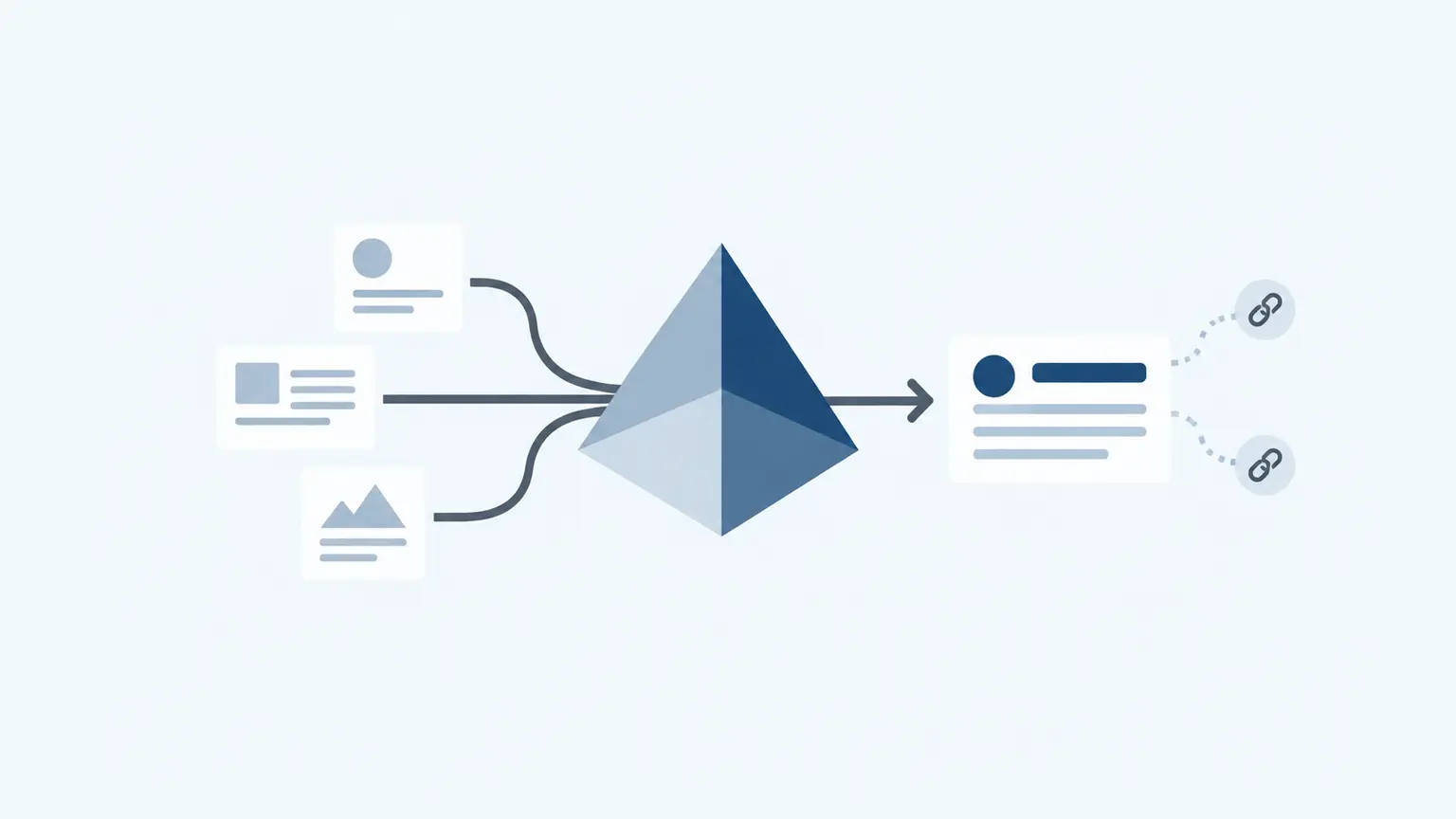
Generative systems may assemble a response from search results, indexed sources, licensed datasets or their existing model knowledge. The exact process varies by product and can change. GEO therefore concentrates on durable signals: publish material that can be found, parsed, attributed and checked.
Useful practices include naming products and organisations consistently, identifying authors and dates, supporting claims with evidence, publishing genuinely original examples, maintaining crawlable pages and earning relevant mentions from independent sources. Concise definitions and well-labelled sections help machines retrieve a passage, while the surrounding explanation gives it context.
Consider a logistics software company with a specialised method for reducing failed deliveries. A vague service page says its platform “transforms operations”. A stronger resource explains the problem, defines the method, shows an anonymised worked example, states the assumptions behind the calculation and identifies the experienced team who developed it.
The stronger page gives an AI system distinct, attributable facts rather than interchangeable marketing language. If trade publications, partners or customers independently discuss the company’s work, those references may reinforce what the company says about itself.
Potential customers may ask conversational tools to explain options, compare approaches or shortlist suppliers. They may meet your expertise inside an answer before they visit your site. Accurate representation can therefore influence awareness, consideration and branded searches even when conventional referral reporting is incomplete.
GEO also exposes content weaknesses. If a capable reader cannot determine who you serve, what you do differently or what evidence supports a claim, a generative system is unlikely to resolve the ambiguity reliably.
It overlaps with answer engine optimisation and SEO. AEO emphasises extractable direct answers; GEO focuses specifically on generative responses, synthesis and citation. In practice, useful content, technical accessibility and credible external signals support all three.
Businesses sometimes create large volumes of synthetic content that repeat public information without adding experience. Volume does not create distinctiveness, and factual or stylistic inconsistencies can make the organisation harder to understand.
Another mistake is measuring only clicks. Some AI visibility may produce later branded searches or untracked enquiries. Use referral data where available, but also monitor how important prompts represent the brand, whether citations are accurate and whether qualified prospects mention AI-assisted research.
Do not publish confidential client information, invented evidence or unverified statistics simply to appear quotable. A false claim can travel further when another system summarises it.
No. Publishers do not control how independent AI products retrieve, rank, synthesise or cite information. GEO improves the clarity and credibility of available material; it cannot guarantee a mention, recommendation or position.
Track a stable set of commercially relevant prompts, citations and factual descriptions over time, alongside AI referral traffic, branded search and qualified enquiries. Treat prompt results as samples because answers vary between tools, users and dates.
Who wrote this

Steve founded Epitomise in 2017 after UK, international and global marketing leadership roles, most recently as Global CMO of the Vitec Group’s Videocom Division. He works with SME and technology businesses on strategy, positioning and the execution that follows — more about Steve.
Read next
Learn what A/B testing means, how a controlled marketing experiment works and which mistakes make test results unreliable.
Learn what answer engine optimisation means and how to make useful business content easier for search and AI systems to extract and cite.
Learn what bounce rate means, why analytics tools calculate it differently and how to diagnose a high bounce rate without guessing.
A short discovery call is usually enough to tell. No deck, no pitch.
Book a discovery call