What is A/B testing?
Learn what A/B testing means, how a controlled marketing experiment works and which mistakes make test results unreliable.

Marketing glossary
A landing page gives a particular visitor a focused place to evaluate an offer and act. Unlike a general website page, it usually serves one campaign, audience and next step.
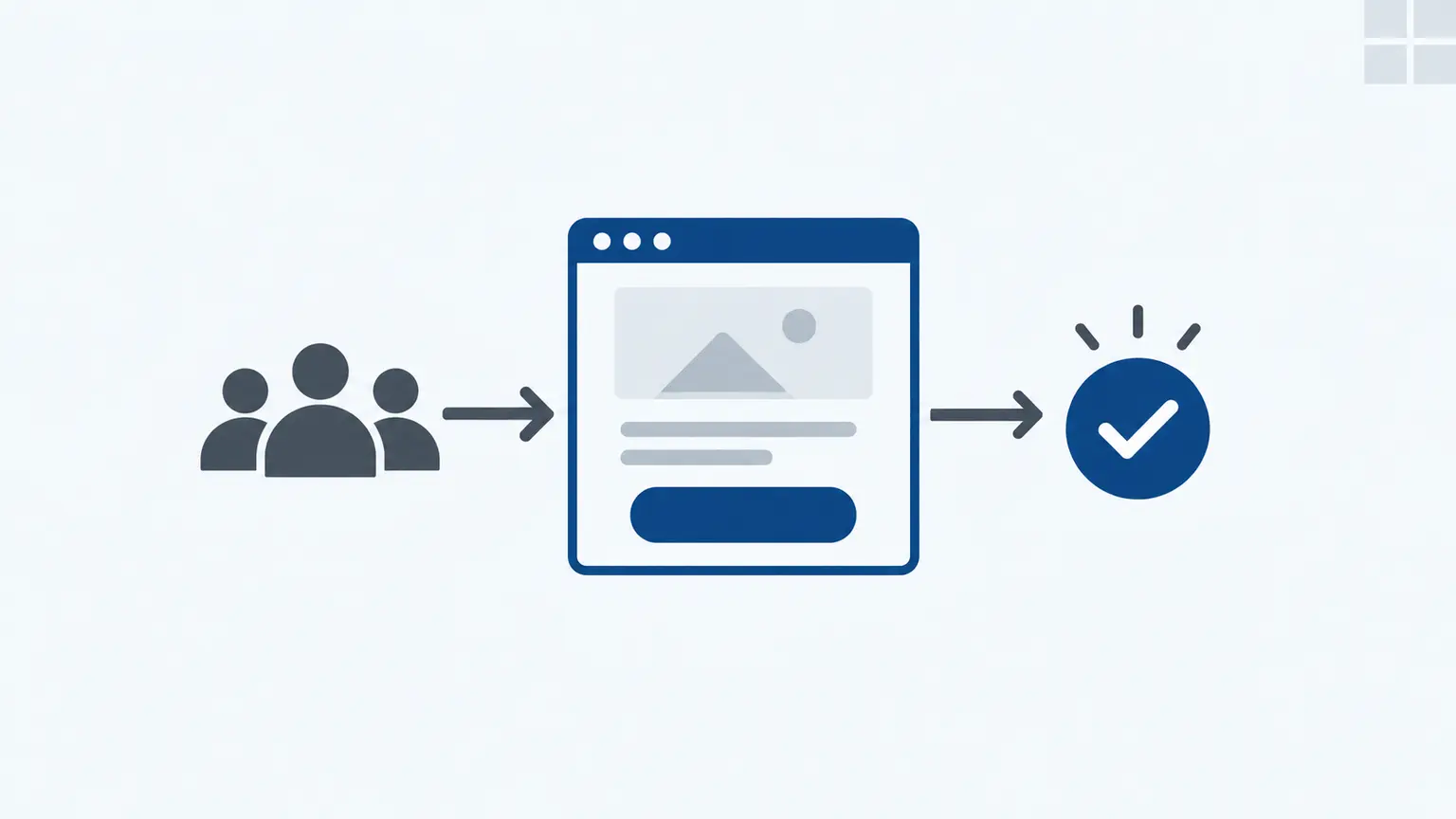
Technically, any page where a visitor first arrives can be called a landing page in analytics. In marketing practice, the term normally means a page deliberately built as the destination for paid advertising, email, social, direct mail or a targeted search query.
The page should maintain “message match”: the promise, audience and language should agree with the source that brought the visitor there. If an advert offers a guide for manufacturing finance directors but the destination opens with generic company history, the visitor must work to discover whether they are in the right place.
A useful landing page generally contains a clear proposition, relevant explanation, evidence, answers to likely objections and one primary call to action. The exact order depends on what the visitor needs to decide; there is no sacred template that makes every offer convert.
A small accountancy firm runs search adverts for research and development tax advice aimed at engineering companies. Sending clicks to its homepage forces visitors to navigate services written for several audiences.
A focused landing page could state who the service is for, explain the assessment process, identify the records needed, show relevant qualifications or named evidence and invite the visitor to request an initial eligibility discussion. The advert and page should use compatible language and avoid promising a successful claim before the facts are assessed.
The firm can then measure eligible visits, enquiries, qualified opportunities and customers rather than judging the page only by form submissions.
Focus makes the visitor’s decision easier and measurement cleaner. The team can connect a traffic source with a relevant message and action, then test a specific weakness rather than changing a whole website.
Landing pages also expose strategic problems. If the audience, proposition or offer cannot be expressed clearly on one page, new colours or a shorter form are unlikely to fix the underlying issue.
Do not remove useful information merely because someone says landing pages must be short. A simple low-risk download may need little explanation. A high-value B2B service may require process, evidence, commercial context and answers for several members of a buying group.
Avoid collecting information you do not need at that stage. Every field adds effort and creates a data-handling responsibility. Equally, do not maximise form fills by hiding qualification details that sales must reveal later.
Do not create near-identical pages for dozens of keywords. Each page should serve a materially different audience, offer or intent rather than repeating thin copy with nouns swapped.
Not always. Removing unrelated navigation can support campaign focus, but visitors may still need access to trust, privacy or company information. Make the decision from user need rather than a blanket rule.
It can be an entry page in analytics, but it usually serves several audiences and routes. A campaign landing page is intentionally narrower.
Who wrote this

Steve founded Epitomise in 2017 after UK, international and global marketing leadership roles, most recently as Global CMO of the Vitec Group’s Videocom Division. He works with SME and technology businesses on strategy, positioning and the execution that follows — more about Steve.
Read next
Learn what A/B testing means, how a controlled marketing experiment works and which mistakes make test results unreliable.
Learn what answer engine optimisation means and how to make useful business content easier for search and AI systems to extract and cite.
Learn what bounce rate means, why analytics tools calculate it differently and how to diagnose a high bounce rate without guessing.
A short discovery call is usually enough to tell. No deck, no pitch.
Book a discovery call