Account-based marketing: focus effort on valuable accounts
A practical account-based marketing guide for selecting target accounts, coordinating sales and marketing, and measuring meaningful progress.

Marketing guides
Point-of-sale marketing and merchandising shape the final part of a buying decision. They help someone notice the product, understand the difference, find the right option and act with confidence. This may happen in a shop, showroom, reception area, exhibition stand, distributor branch or digital buying environment. The setting changes, but the job remains practical: reduce uncertainty and make the next choice easier.
Part 3 of Execute Your Tech Idea places point-of-sale activity alongside the other channels used to create and convert demand. It should not be treated as decoration applied after the campaign. The display, message, stock and staff all form part of the customer experience at the moment of purchase.
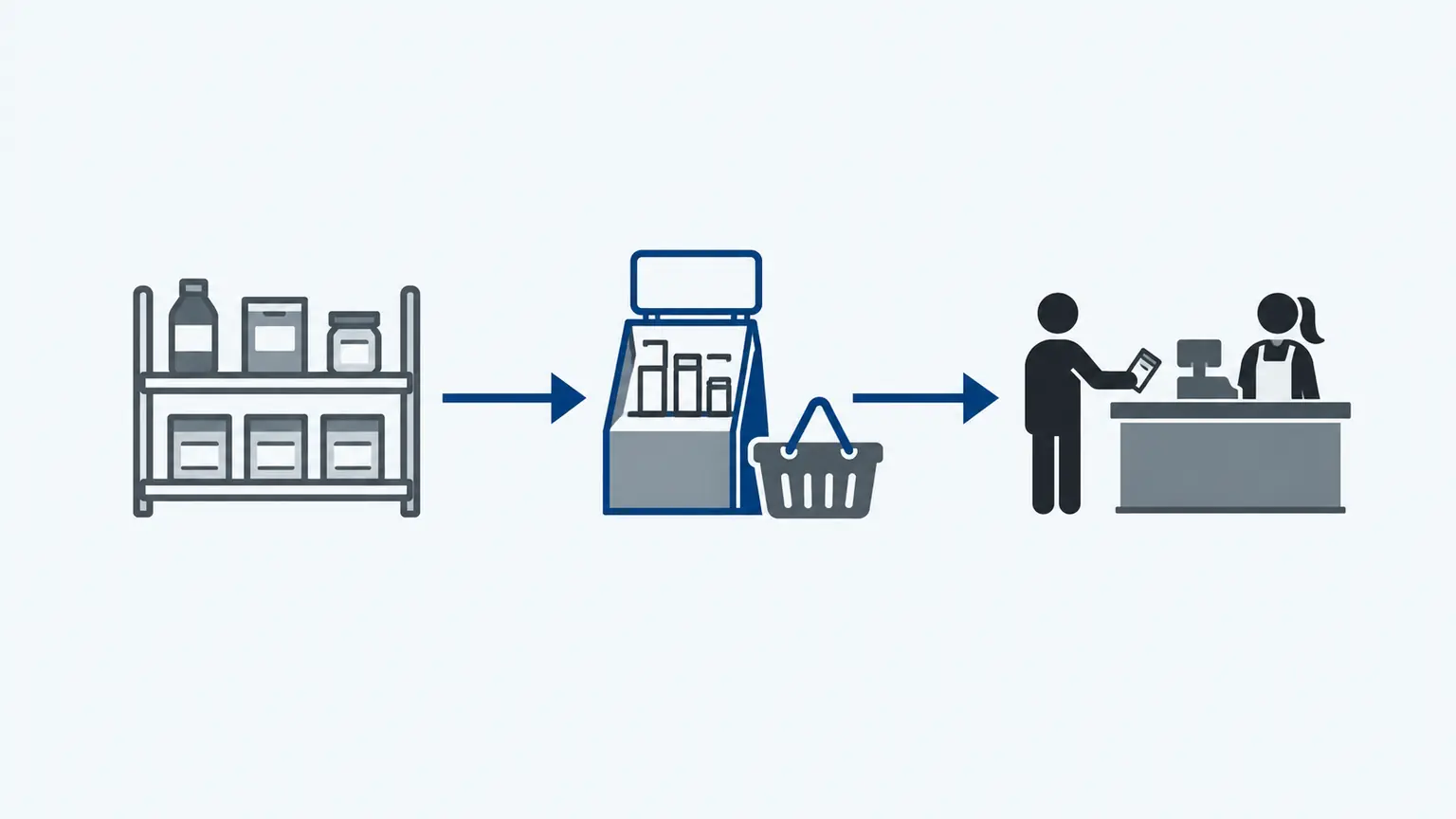
The channel earns attention when several products compete at the same buying moment, when customers need help choosing between options or when a wider campaign needs to be recognised in-store. It can support a launch, promotion, seasonal range, premium option, add-on sale or change in product position.
It also matters in service environments. A clinic may explain related services in reception; a trade counter may show installers which option suits a particular job; an exhibition stand may guide visitors from a broad problem to a useful conversation. Merchandising is not limited to supermarket shelves.
Start by observing the real journey. Where does the customer pause? What can they see? Which questions do they ask? What gets missed? Staff and retail partners often know these frictions better than a head-office brief does.
Choose one priority action for each placement: notice a new range, compare models, understand a benefit, add a complementary item or ask for advice. Then name the barrier. The customer may not recognise the brand, understand the category, see the price, trust the claim or find the correct product.
Your material should remove that barrier. A comparison panel can clarify options. A demonstration can make an unfamiliar benefit tangible. Clear shelf navigation can reduce search effort. A sample can address uncertainty about quality. A simple staff prompt can help a conversation start.
Avoid filling every available surface. Too many messages create a wall of equal importance, which means nothing leads. Give the main proposition visual priority and place detail where a customer has time to read it.
Measure the space and view it from the customer’s approach, not only from directly in front. Check sight lines, lighting, distance, accessibility and nearby competitor material. Ensure prices and conditions remain clear. In a temporary event space, plan assembly, power, storage and safe movement as carefully as artwork.
Use familiar words and make product differences easy to scan. Keep brand cues consistent with the activity that brought someone there, whether that was an advert, email, recommendation or out-of-home campaign. If a shopper cannot connect the display with what they already saw, you have paid twice to introduce the same idea.
Digital screens and interactive displays can show demonstrations, adapt messages or handle deeper comparisons. They should solve a customer problem rather than exist because a screen was available. Test loading, touch targets, sound, connectivity and what happens when the technology fails.
A display that never reaches the floor has no creative effectiveness. Confirm production lead times, retailer approval, delivery, installation, stock allocation and removal. Provide branches or partners with a simple guide showing what goes where and why. Use photographs or checks where the estate is large enough to make compliance uncertain.
Brief staff on the proposition, qualifying questions and any promotional terms. They do not need a script, but they should know what the customer has been promised. Incentives can support attention, although they must not encourage unsuitable recommendations or destroy margin.
Plan availability with marketing. Empty shelves and unavailable demonstration products turn demand into disappointment. If stock varies by location, decide whether the campaign should vary too.
Where possible, compare similar locations or periods. Change one important variable at a time: position, headline, format, demonstration or offer. Record factors such as stock availability, footfall and competing promotions so you do not credit the display for changes caused elsewhere.
Useful measures include:
Sales volume without margin can hide an expensive result. Equally, a premium display may lift confidence and product mix without creating a dramatic unit increase. Review the outcome against the job you set at the start.
Point-of-sale activity converts attention created by television, radio, outdoor, email, social and influencer marketing. Product demonstrations can become useful articles and video content, while retailer insight can improve positioning and value messaging. In a launch, connect merchandising to the wider go-to-market plan so availability, promotion and sales readiness move together.
Point-of-sale marketing usually refers to promotional messages and materials near the buying decision. Merchandising is broader and includes product selection, placement, presentation, availability and navigation. In practice they work together, because a strong message cannot compensate for a product that is hidden or unavailable.
Yes. Showrooms, clinics, receptions, trade counters and events all contain moments where someone chooses a service or next step. Clear comparisons, demonstrations, prompts and staff support can reduce uncertainty in the same way that retail material helps a product choice.
Start with a limited number of comparable locations or a defined period. Record the baseline, stock position and any other promotions, then change one meaningful element. Review both customer behaviour and commercial return before producing the display more widely.
Epitomise can help you connect the buying environment to a clearer marketing and growth plan, rather than treating the final metre as an afterthought.
Who wrote this

Steve founded Epitomise in 2017 after UK, international and global marketing leadership roles, most recently as Global CMO of the Vitec Group’s Videocom Division. He works with SME and technology businesses on strategy, positioning and the execution that follows — more about Steve.
Read next
A practical account-based marketing guide for selecting target accounts, coordinating sales and marketing, and measuring meaningful progress.
How to plan outdoor advertising with a clear audience, location, message and measurement approach, from local posters to digital out-of-home.
How to use live chat, messaging and helpful sales conversations to reduce buyer friction while protecting trust and team capacity.
A short discovery call is usually enough to tell. No deck, no pitch.
Book a discovery call