What is A/B testing?
Learn what A/B testing means, how a controlled marketing experiment works and which mistakes make test results unreliable.

Marketing glossary
Attribution tries to answer a commercially important question: which marketing activity helped create this result? The answer is useful, but never perfectly objective, because customers move between devices, channels and offline conversations that no dashboard sees completely.
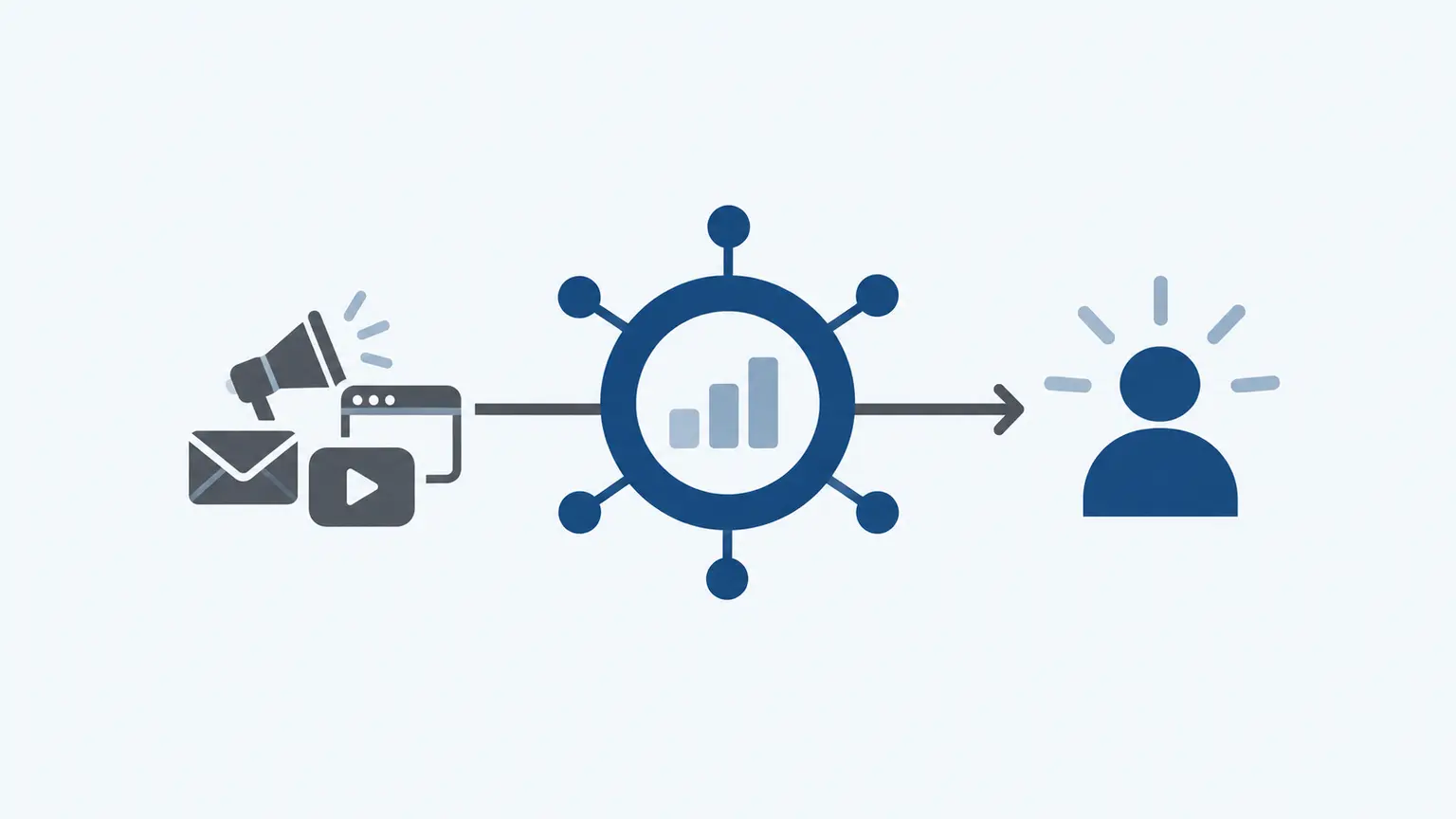
An attribution model applies a rule for distributing credit. Common approaches include:
Each model answers a slightly different question. First-click highlights discovery; last-click highlights the closing touchpoint. Neither proves that the credited channel caused the outcome.
A facilities director first sees a consultancy’s LinkedIn post, later reads an organic guide, receives an email after downloading a checklist and finally searches the company name before submitting an enquiry. Last-click attribution may award the entire result to organic search. First-click may award it to social media.
Both reports describe a recorded edge of the journey while ignoring cooperation between channels. The consultancy should examine the sequence, ask the lead how they found it and compare patterns across multiple qualified opportunities rather than declaring one channel the solitary hero.
Responsible attribution helps you:
For SMEs with long B2B sales cycles, CRM data often matters as much as website analytics. Campaign parameters, source fields, sales notes and enquiry questions can create a more complete view.
The first mistake is treating attributed revenue as proven incremental revenue. Attribution says which recorded touchpoints receive credit under a rule. Incrementality asks what would have happened without the activity, which generally needs controlled testing or careful comparison.
Another mistake is accepting a platform’s self-report as neutral. Advertising platforms may each claim the same conversion because their attribution windows overlap. Privacy controls, cookie loss, shared devices, telephone calls and word of mouth also leave gaps.
Finally, businesses optimise for easy-to-track final clicks and cut harder-to-measure activity that creates demand. Use attribution as evidence alongside experiments, customer interviews, sales-cycle knowledge and overall commercial performance.
Use a consistent model that fits the decision, then compare it with other views. Last-click can support operational reporting, while first-click and journey analysis expose discovery. The honest answer may be a range rather than one definitive allocation.
No. Attribution distributes credit across observed interactions. Proving causation requires evidence that the outcome would differ without the marketing activity, usually through experiments or credible comparison groups.
Who wrote this

Steve founded Epitomise in 2017 after UK, international and global marketing leadership roles, most recently as Global CMO of the Vitec Group’s Videocom Division. He works with SME and technology businesses on strategy, positioning and the execution that follows — more about Steve.
Read next
Learn what A/B testing means, how a controlled marketing experiment works and which mistakes make test results unreliable.
Learn what answer engine optimisation means and how to make useful business content easier for search and AI systems to extract and cite.
Learn what bounce rate means, why analytics tools calculate it differently and how to diagnose a high bounce rate without guessing.
A short discovery call is usually enough to tell. No deck, no pitch.
Book a discovery call