What is A/B testing?
Learn what A/B testing means, how a controlled marketing experiment works and which mistakes make test results unreliable.

Marketing glossary
An MQL gives marketing and sales a shared way to identify promising demand. Its value comes from the agreed criteria and next action, not from moving a contact into a grandly named CRM column.
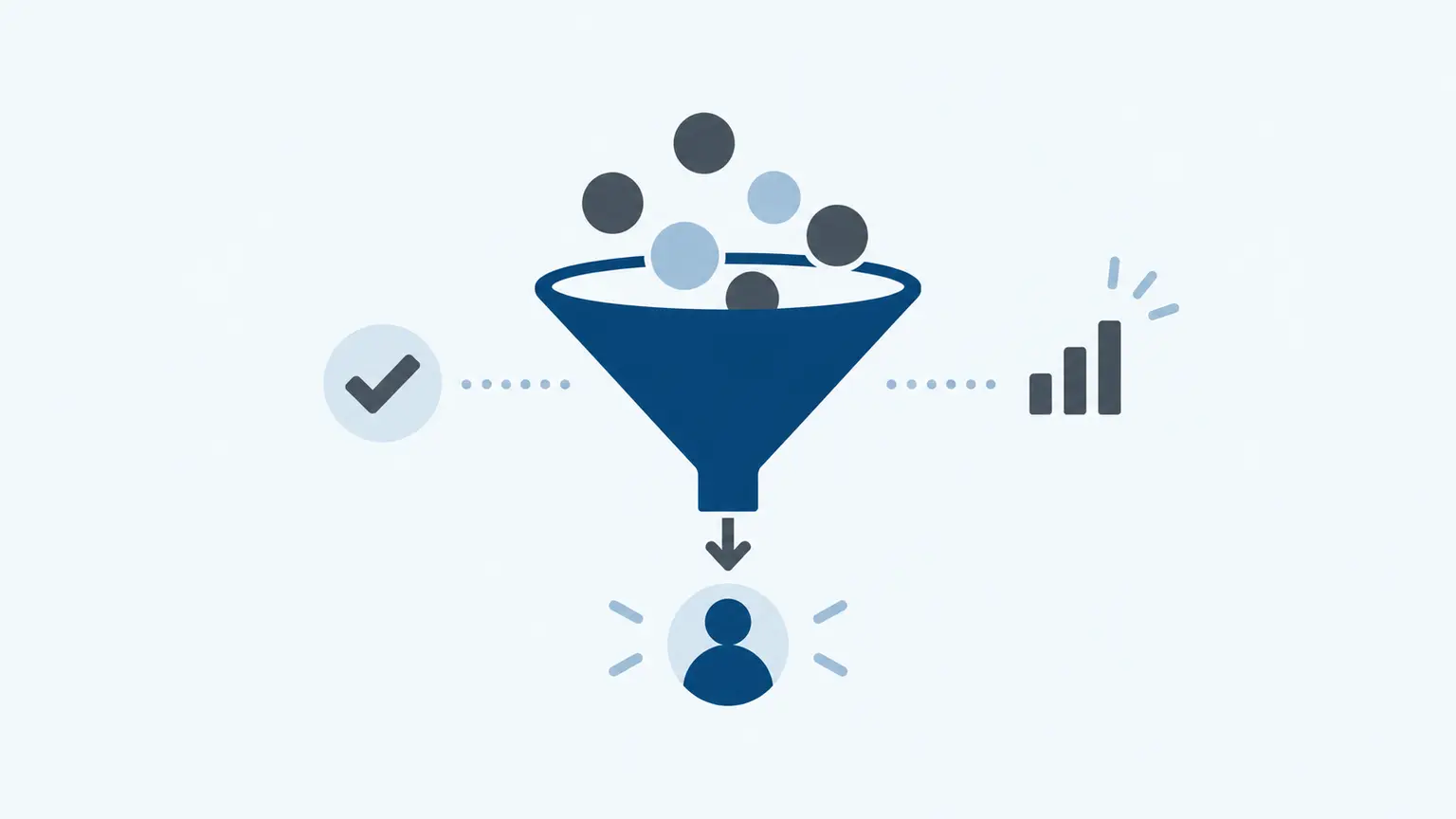
Marketing qualification usually combines fit and engagement. Fit considers whether the organisation, role, location, need or budget resembles the ideal customer profile. Engagement considers actions that suggest purposeful interest, such as attending a relevant webinar, requesting a guide, returning to a service page or asking a substantive question.
The right threshold depends on the buying journey. A newsletter subscription may be useful early interest but insufficient for sales contact. A pricing-page visit from a target account may carry more weight, although one anonymous action rarely proves readiness.
A software consultancy targets UK manufacturers with 50–500 employees. It defines an MQL as a relevant decision-maker at a company in that profile who has either requested an automation assessment or completed two higher-intent actions within 30 days.
A student downloading a general technology report does not qualify, despite adding a conversion to the dashboard. An operations director at a suitable manufacturer who attends a sector webinar and reviews a case study does. Marketing routes the second contact for research and a measured follow-up, while continuing to nurture earlier-stage contacts.
A clear MQL definition can:
Review the definition against eventual sales qualified leads, opportunities and customers. If a large share never fits or progresses, the threshold, targeting or offer may need attention.
The classic mistake is scoring activity without fit. A competitor, supplier or job seeker can accumulate points by opening emails and visiting pages. Behavioural scoring should never turn the wrong person into the right customer.
Another mistake is allowing marketing to set the definition alone. Sales can explain which characteristics and signals correlate with credible conversations; marketing can explain what its data actually records. Both teams need to agree the threshold, response time, owner and recycling process.
Do not confuse an MQL with consent to send any message by any channel. Qualification and data-protection obligations are separate questions. Finally, avoid leaving the definition unchanged for years: compare it with real outcomes and revise it deliberately.
Usually not. A form can capture low-intent or poor-fit contacts. Qualification should reflect the purpose of the form, the prospect’s suitability and meaningful behaviour rather than counting every submission equally.
The agreed definition should specify the response. High-intent MQLs may justify prompt personal contact; others may need research or further nurturing. Speed matters only when the contact is appropriate and the approach fits their context.
Who wrote this

Steve founded Epitomise in 2017 after UK, international and global marketing leadership roles, most recently as Global CMO of the Vitec Group’s Videocom Division. He works with SME and technology businesses on strategy, positioning and the execution that follows — more about Steve.
Read next
Learn what A/B testing means, how a controlled marketing experiment works and which mistakes make test results unreliable.
Learn what answer engine optimisation means and how to make useful business content easier for search and AI systems to extract and cite.
Learn what bounce rate means, why analytics tools calculate it differently and how to diagnose a high bounce rate without guessing.
A short discovery call is usually enough to tell. No deck, no pitch.
Book a discovery call