Account-based marketing: focus effort on valuable accounts
A practical account-based marketing guide for selecting target accounts, coordinating sales and marketing, and measuring meaningful progress.

Marketing guides
Telemarketing gives you something most marketing channels delay: a direct response from another person. Used well, it tests relevance, uncovers context and creates an agreed next step. Used badly, it turns a poor list and a rigid script into an interruption.
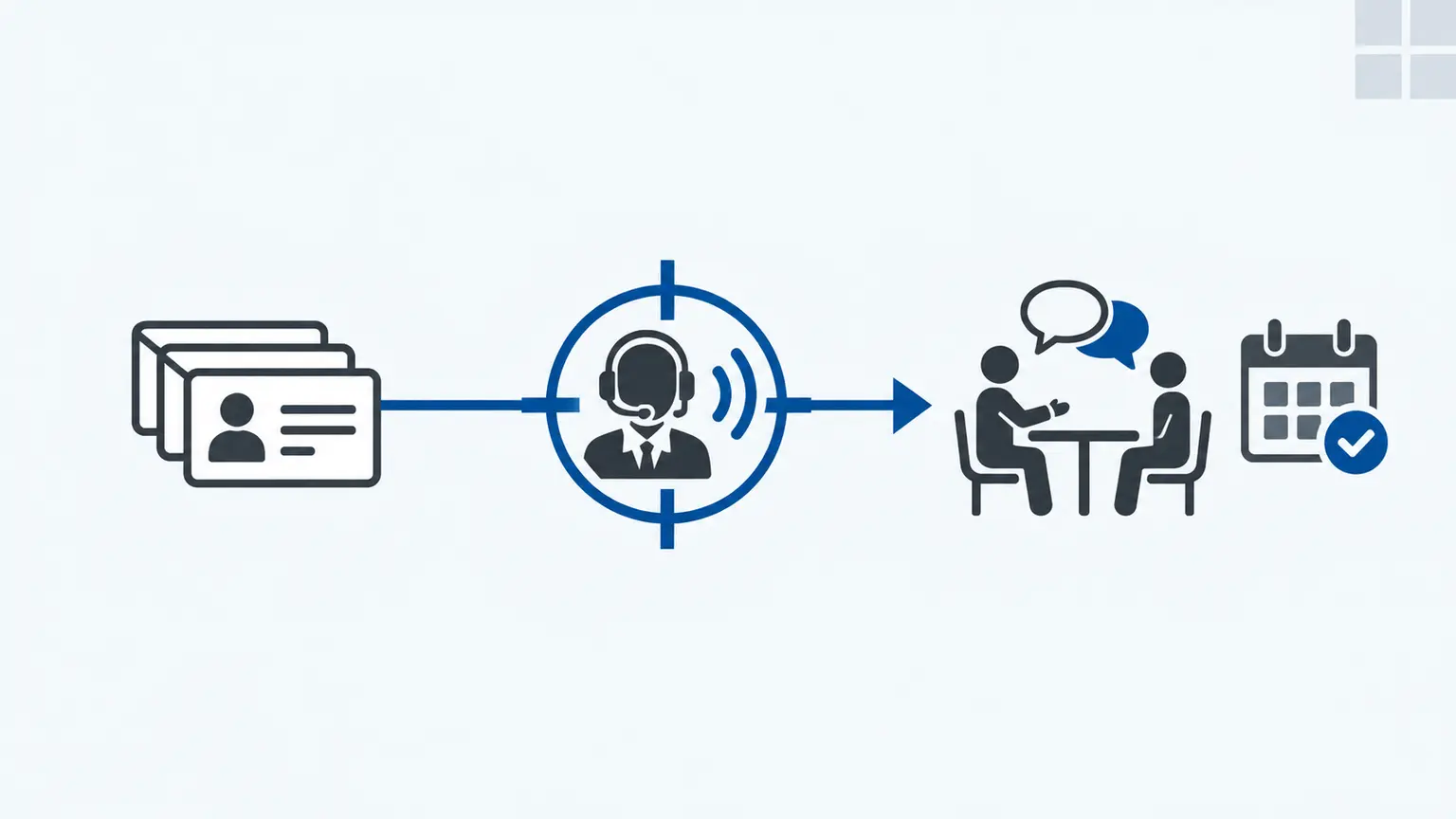
Telemarketing uses telephone conversations to generate, qualify or progress commercial opportunities. It includes prospecting calls, event invitations, market-development conversations, reactivation and follow-up after another marketing interaction.
It is not the same as running a call centre or reading a fixed pitch to every number on a list. Effective business-to-business telemarketing combines clear targeting, conversational skill and disciplined recording. The caller needs a relevant hypothesis, but must listen for evidence that confirms or challenges it.
The distinction between a contact and a sales-qualified lead matters. Reaching the right job title does not demonstrate need, authority, timing or commercial fit. A good call can disqualify an account respectfully, saving time for both sides.
Telephone outreach can create first awareness, but it is often stronger after a credible signal or preceding touch. A prospect may have received direct mail, registered for an event, downloaded useful material or been selected through account-based marketing.
Later, a call can clarify needs, confirm the decision process or reconnect when an opportunity has stalled. Existing-customer calls can surface service issues and relevant opportunities, provided the conversation is genuinely useful rather than an ambush disguised as “checking in”.
Part 3 of Execute Your Tech Idea includes telemarketing among many channel options. Its role should reflect how the audience buys. A senior buyer considering a complex service may welcome a concise, informed conversation; someone making a low-cost self-service purchase probably will not.
Telemarketing works when the market is identifiable, customer value supports human effort and the proposition benefits from dialogue. It is useful for testing a new segment because objections and language arrive quickly and in the prospect’s own words.
It wastes money when data is poor, the offer has no credible relevance, callers are rewarded for raw dial volume or nobody improves the proposition in response to feedback. Calling more people does not repair a weak reason to speak.
Timing and conduct matter. Respect reception teams, contact preferences and a clear “no”. Do not hide the commercial purpose, manufacture familiarity or pressure somebody into a diary commitment. Check the current UK rules that apply to the organisation, data and numbers being used, including screening and record-keeping obligations.
Start with a narrow segment and one testable reason for contact. Define who should not be called as carefully as who should. Build a short call guide rather than a word-for-word script.
Run a small pilot with regular review. Listen to calls where lawful and appropriate, coach for curiosity and clarity, and adapt the targeting or proposition when evidence contradicts the original assumptions.
Operational measures include valid numbers, connection rate, conversations and contact attempts. Commercial measures include qualified conversations, agreed next steps, meetings held, opportunities, conversion, revenue and customer acquisition cost.
Separate activity from effectiveness. Dials per hour can help diagnose process, but optimising it alone encourages short, low-quality calls. Measure disqualification accuracy and progression from meeting booked to meeting held; otherwise an easy diary booking can masquerade as success.
Record objections by theme and segment. Repeated “not a priority” responses may reveal poor timing, while repeated confusion may indicate that the proposition needs work. This qualitative learning can make the campaign valuable even before revenue appears.
Use a guide covering the opening, relevant context, questions, common issues and next steps. A rigid script can prevent listening and sound unnatural, while no structure at all produces inconsistent learning and compliance risks.
There is no universal number. A focused pilot needs enough valid conversations to reveal recurring patterns, not merely a dial target. Review confidence alongside account value, connection rate, segment size and the consistency of objections.
Who wrote this

Steve founded Epitomise in 2017 after UK, international and global marketing leadership roles, most recently as Global CMO of the Vitec Group’s Videocom Division. He works with SME and technology businesses on strategy, positioning and the execution that follows — more about Steve.
Read next
A practical account-based marketing guide for selecting target accounts, coordinating sales and marketing, and measuring meaningful progress.
How to plan outdoor advertising with a clear audience, location, message and measurement approach, from local posters to digital out-of-home.
How to use live chat, messaging and helpful sales conversations to reduce buyer friction while protecting trust and team capacity.
A short discovery call is usually enough to tell. No deck, no pitch.
Book a discovery call