Account-based marketing: focus effort on valuable accounts
A practical account-based marketing guide for selecting target accounts, coordinating sales and marketing, and measuring meaningful progress.

Marketing guides
Direct mail can earn attention precisely because inboxes and social feeds are crowded. Its effectiveness does not come from paper alone; it comes from accurate targeting, a relevant reason to write and a well-designed path from physical item to response.
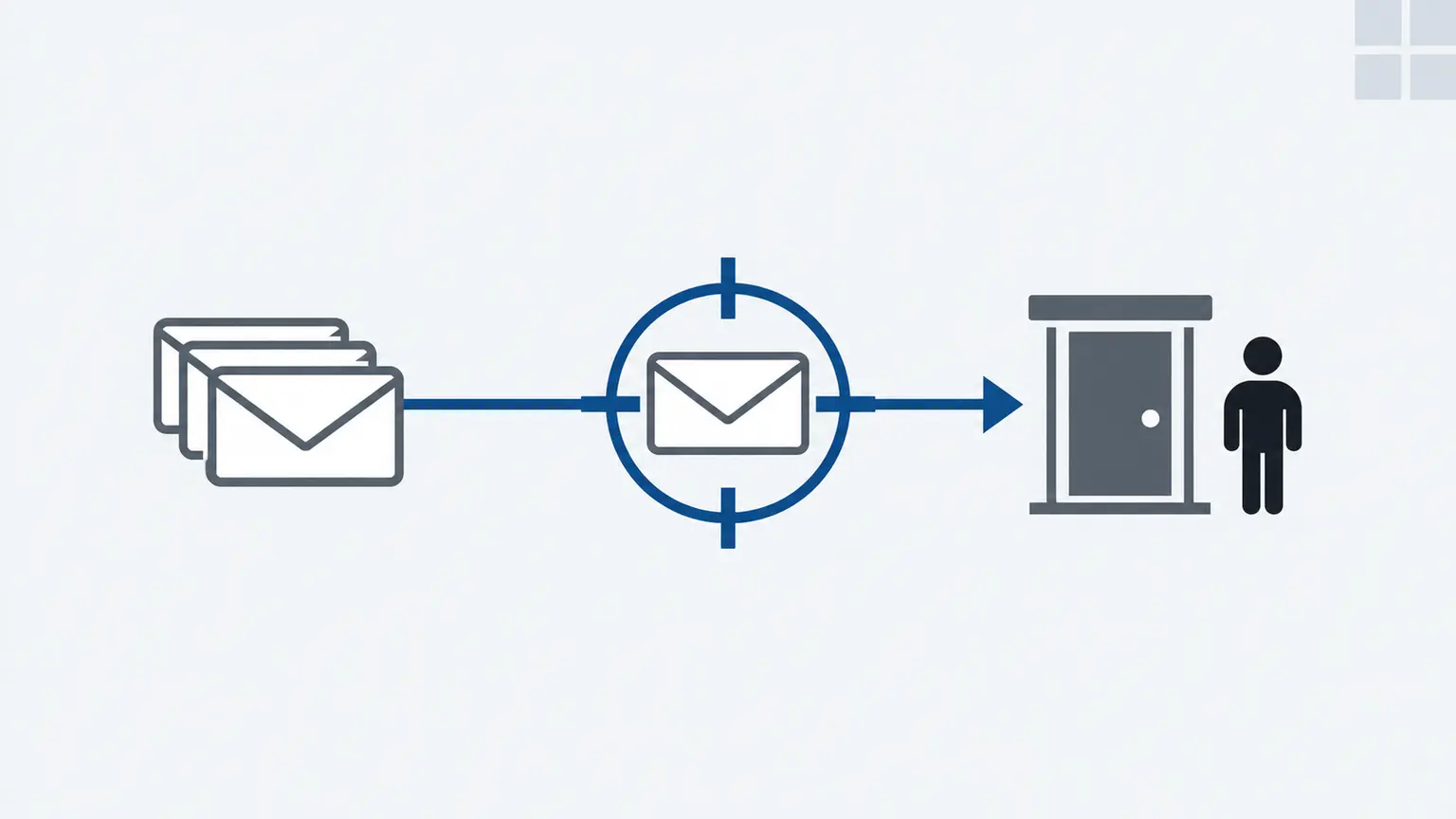
Direct mail is addressed physical marketing sent to a person, household or business location. It can range from a concise letter or postcard to a dimensional pack containing a useful object, sample or tailored report.
Unlike unaddressed door drops, targeted mail starts with a defined recipient or segment. In business-to-business marketing it can reach a priority account, support a sales conversation or introduce an idea that is difficult to explain in a short advert.
Physical format creates creative options but also friction. The recipient must quickly understand who sent it, why it is relevant and what to do next. A short URL, QR code, reply mechanism or named contact can connect the piece to a landing page and allow measurement. Accessibility still matters: essential information should not exist only inside a QR code.
Direct mail commonly creates awareness or reactivates interest. A well-targeted letter can introduce a problem, invite someone to an event or offer a useful assessment. Later in the journey, a tailored pack might help an internal champion explain a proposal to colleagues.
It works particularly well inside account-based marketing, where the organisation has already justified additional research and effort. Part 3 of Execute Your Tech Idea frames direct mail as one route among many; the strongest campaign usually combines it with digital research, relevant content, email or a human follow-up.
Plan the transition between channels. If the letter promises a diagnostic, the landing page and follow-up conversation should deliver that diagnostic rather than reverting to generic sales copy.
Direct mail works when you can identify recipients accurately, the proposition is relevant and the value of a response supports the cost. It can help reach senior decision-makers, local audiences, lapsed customers and narrow professional groups.
It wastes money when a list is stale, the creative idea overwhelms the message or the item has no credible connection to the recipient’s needs. An expensive gift can also feel manipulative, breach a recipient’s policies or create unnecessary waste. Utility and relevance beat novelty for novelty’s sake.
Consider practical delivery. Hybrid working may make an office address unreliable. Gatekeepers may filter generic packs. A correctly named recipient, a sensible format and timing around known activity can improve the chance of attention without resorting to deceptive packaging.
Begin with audience and economics. Estimate the total cost per item, expected response, qualification rate and likely customer value. Then choose a small test that can reveal whether the list, message and offer work.
Review the piece as the recipient will encounter it: envelope, opening line, scan path and action. Avoid manufacturing urgency or pretending that a bulk campaign is a personal note. Honest specificity is more persuasive than faux intimacy.
Track valid delivery, response rate, qualified response, meetings, opportunities, sales and revenue. Calculate total campaign cost and customer acquisition cost, including data, print, postage, fulfilment, creative and follow-up time.
Use unique URLs or response codes, but ask prospects how they heard about you because physical mail may trigger a branded search or direct visit instead. Match responses back to the campaign in the CRM without collecting more personal data than needed.
A response is not automatically positive. Record opt-outs, complaints, returned mail and poor-fit enquiries. These signals help assess list quality and protect future activity.
It can, especially when the target market is narrow, account value is high and digital channels are crowded. Results depend on accurate data, relevance and follow-up rather than on the medium being inherently persuasive.
Only when it is useful, proportionate and acceptable under the recipient’s policies. A clear, relevant letter often performs the job without the cost, environmental impact or awkwardness of an unsolicited gift.
Who wrote this

Steve founded Epitomise in 2017 after UK, international and global marketing leadership roles, most recently as Global CMO of the Vitec Group’s Videocom Division. He works with SME and technology businesses on strategy, positioning and the execution that follows — more about Steve.
Read next
A practical account-based marketing guide for selecting target accounts, coordinating sales and marketing, and measuring meaningful progress.
How to plan outdoor advertising with a clear audience, location, message and measurement approach, from local posters to digital out-of-home.
How to use live chat, messaging and helpful sales conversations to reduce buyer friction while protecting trust and team capacity.
A short discovery call is usually enough to tell. No deck, no pitch.
Book a discovery call